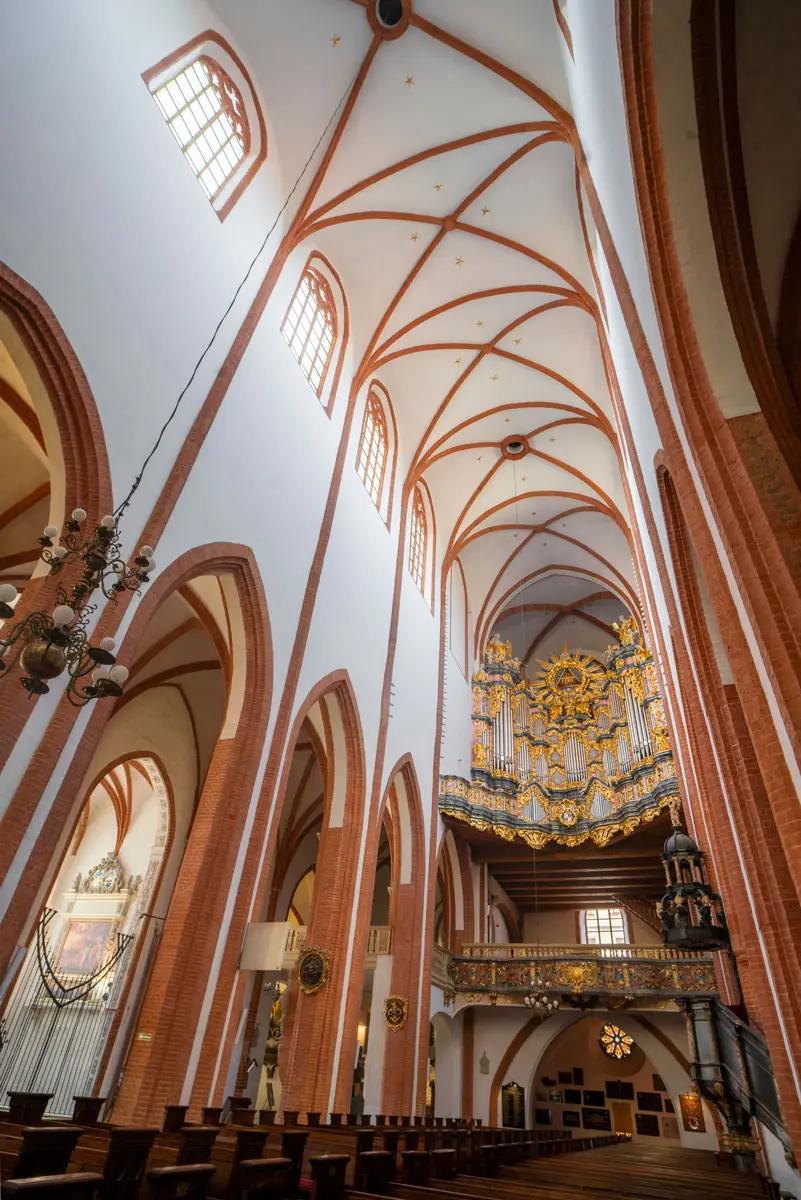
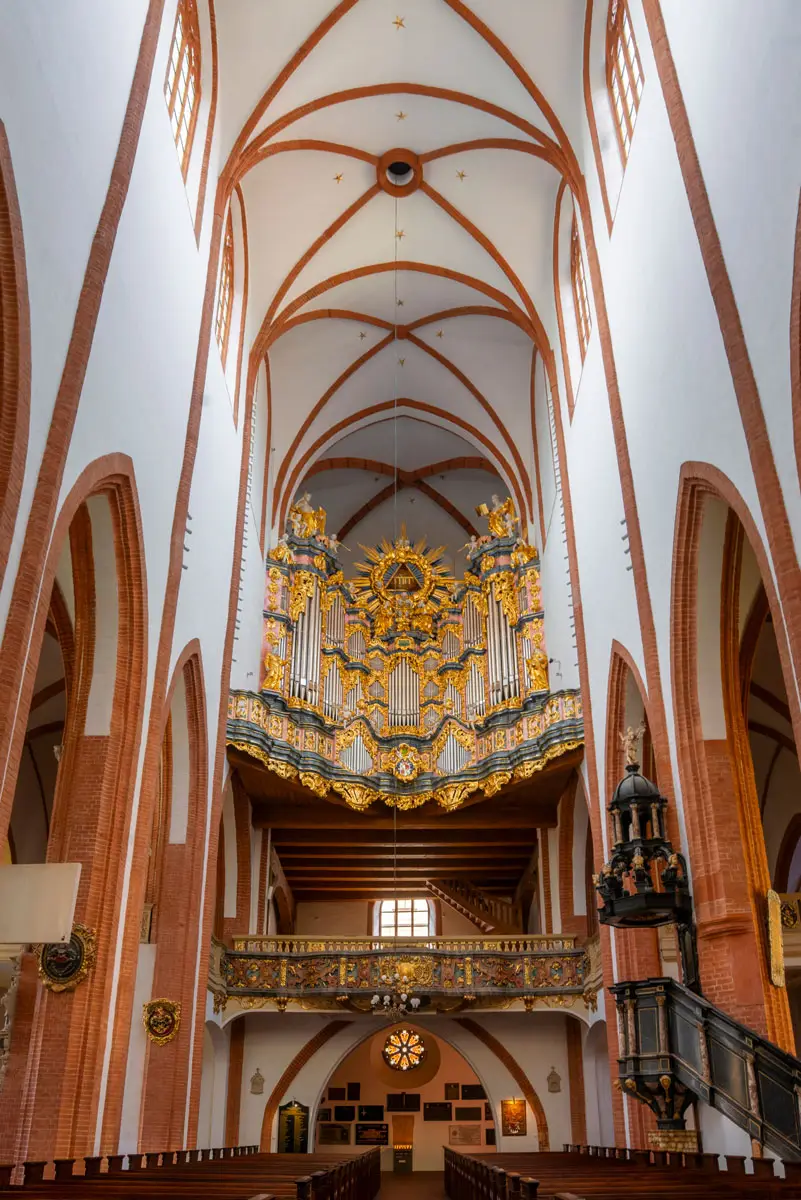
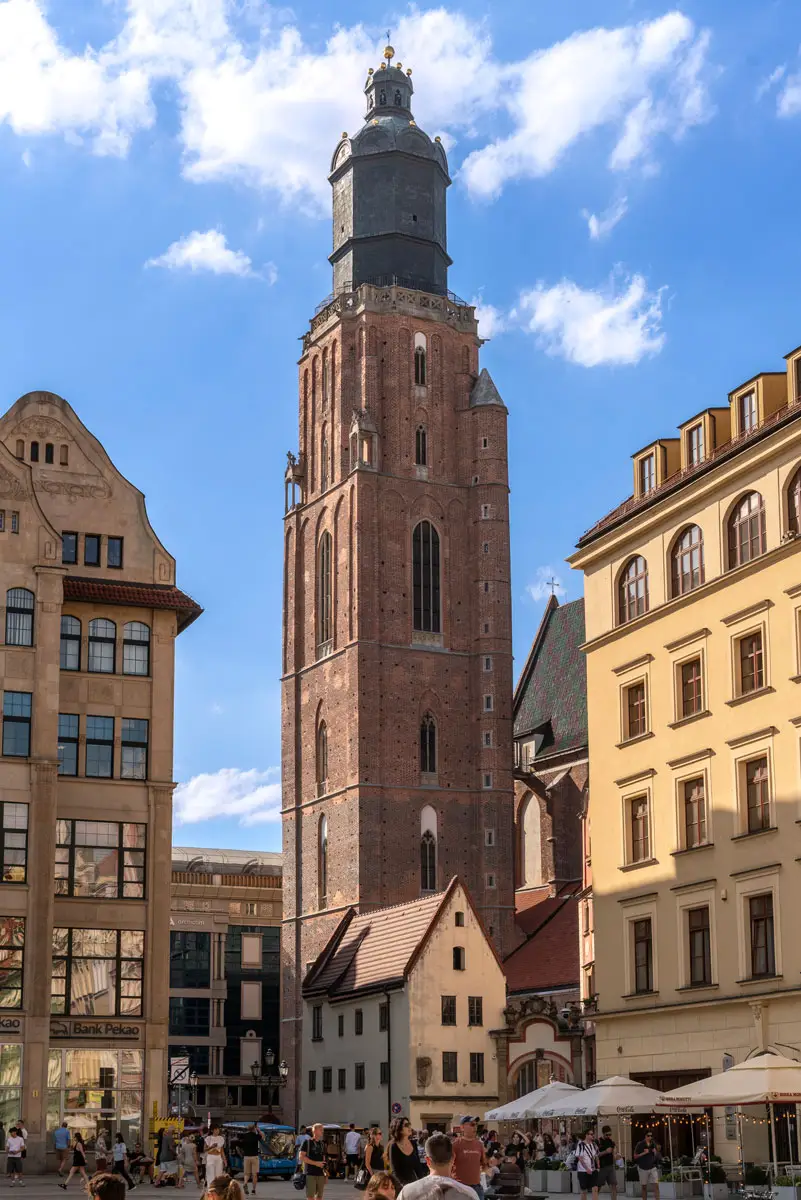
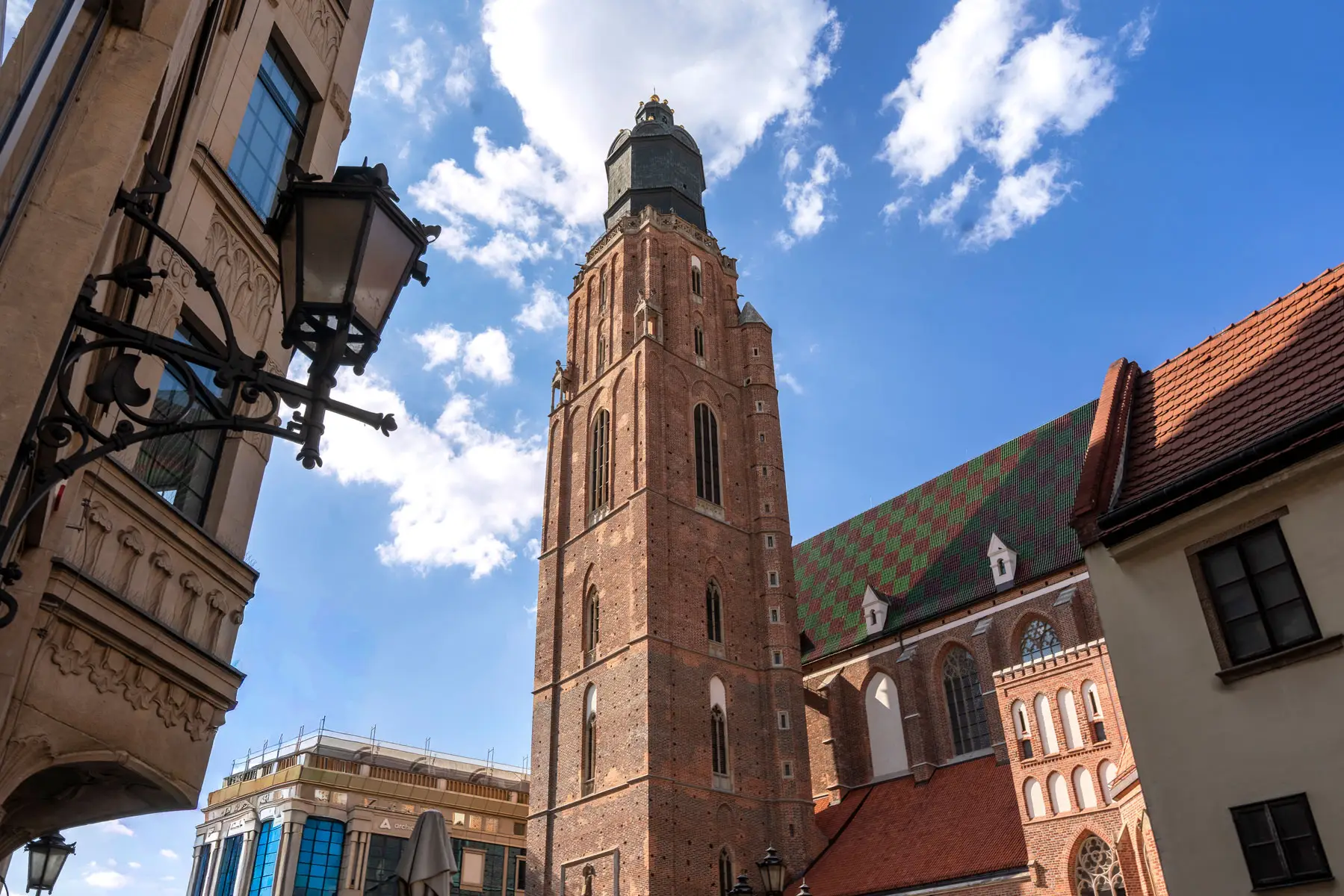
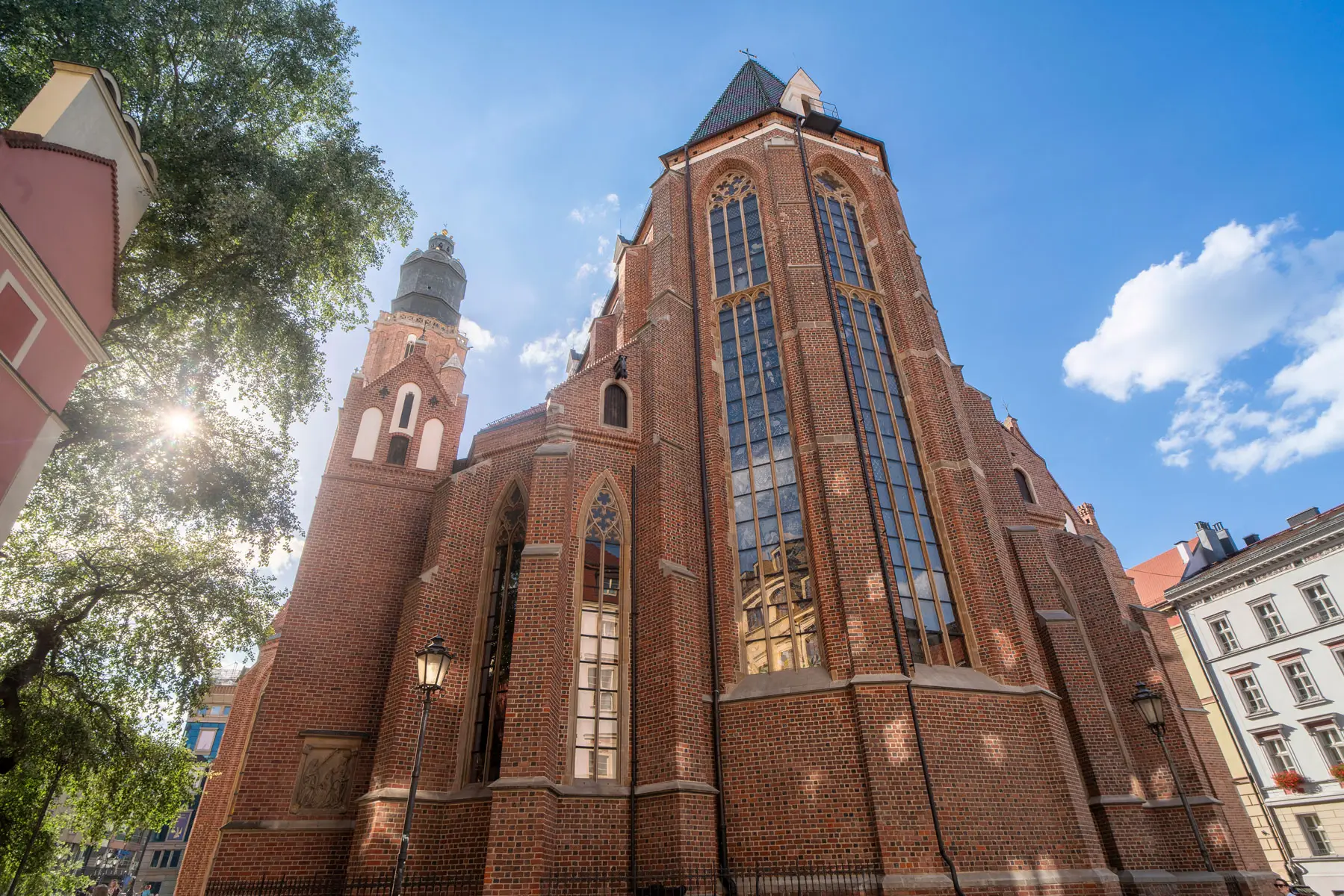
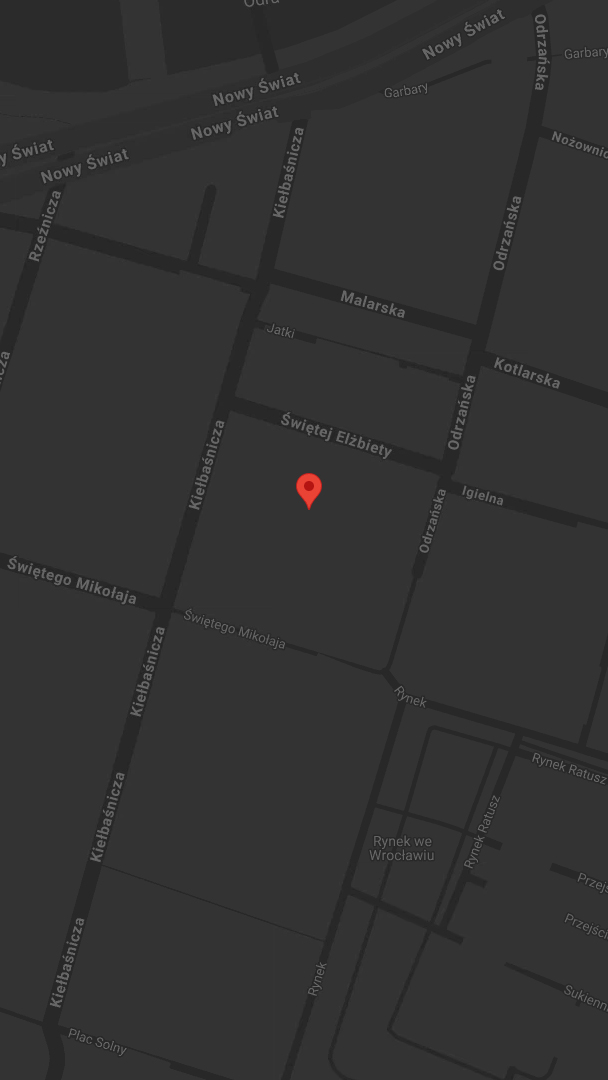
Situated right next to Wrocław’s Market Square, the basilica has remained one of the city’s most distinctive landmarks for centuries. For centuries, it was the most important church in the burgher Wrocław, while the cathedral on Ostrów Tumski remained the spiritual centre of the diocese. It was in the basilica that the religious, social and ceremonial life of the medieval city centred, and the church’s founders and patrons were primarily wealthy burghers of Wrocław.
Built on the site of an earlier church, the basilica is one of the finest examples of Silesian brick Gothic architecture. This monumental three-nave hall, with its imposing tower standing over 90 metres tall, dominated Wrocław’s skyline for centuries, serving as an important landmark for merchants and travellers arriving in the city. Its distinctive silhouette, slender buttresses, tall ogival windows and spacious interior bear witness to the ambitions of the medieval burghers, who sought to create a place of worship on a par with the most important churches in Central Europe. A distinctive feature of the basilica is the impressive complex of chapels surrounding the main body of the church, which were commissioned by the wealthiest patrician families. They form one of the best-preserved medieval complexes of burgher chapels in Poland, illustrating the development of art and architecture from the 14th to the 16th century.
The fate of the church is inextricably linked to the history of Wrocław. Following the Reformation, it became Wrocław’s main Protestant church, and in the following centuries it witnessed the most significant political and social events. It has been ravaged by fire on numerous occasions, the most tragic of which occurred in 1976, when the tower cupola collapsed. However, the rebuilt church has regained its historic character, remaining a jewel of medieval burgher architecture in Poland and one of Wrocław’s most important symbols.