Gems of Religious Gothic Architecture
Greek Catholic Cathedral of St Vincent and St James
Construction period: 1240–1350
Founder: Duke Henry II the Pious
Building type: Greek Catholic Cathedral
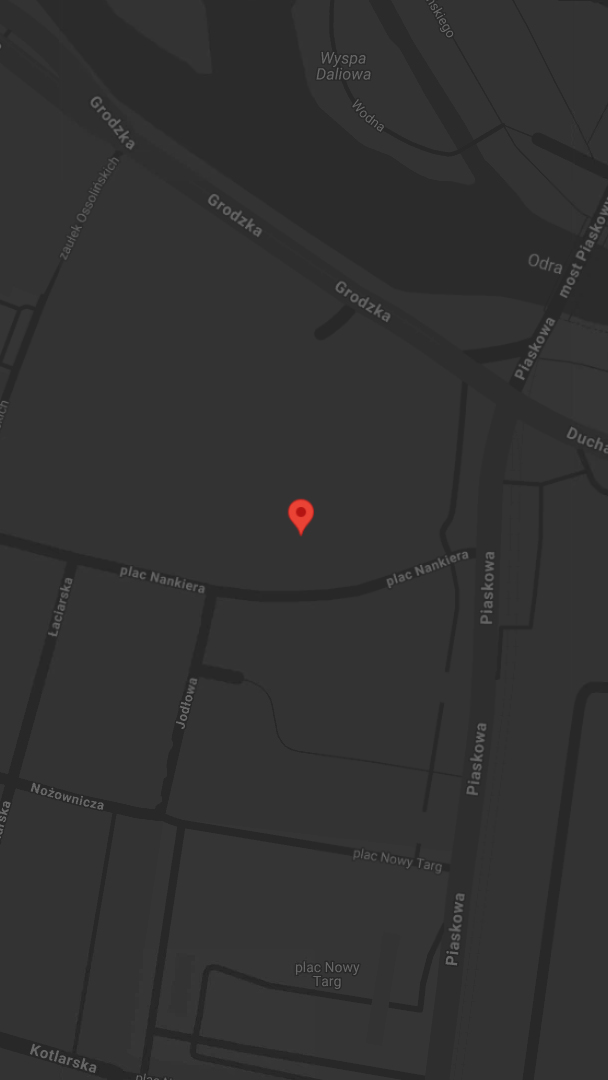
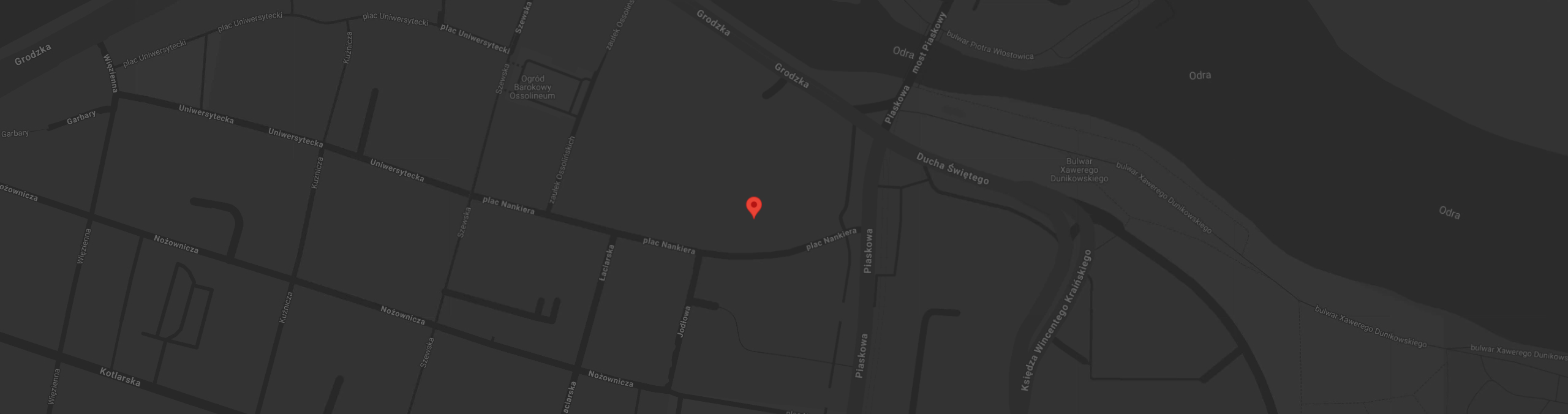
Location: 15 Nankiera Square
Greek Catholic Cathedral of St Vincent and St James

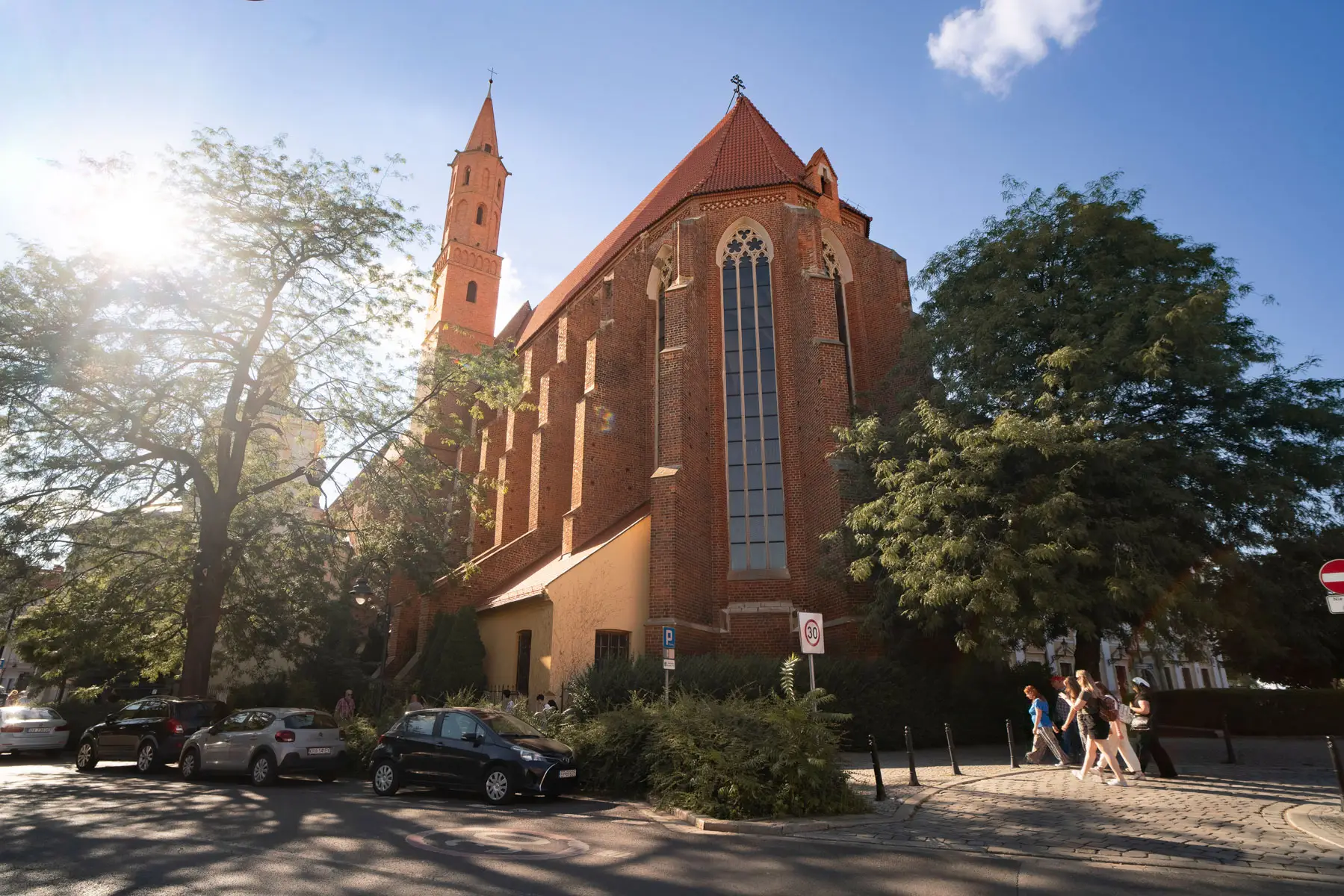
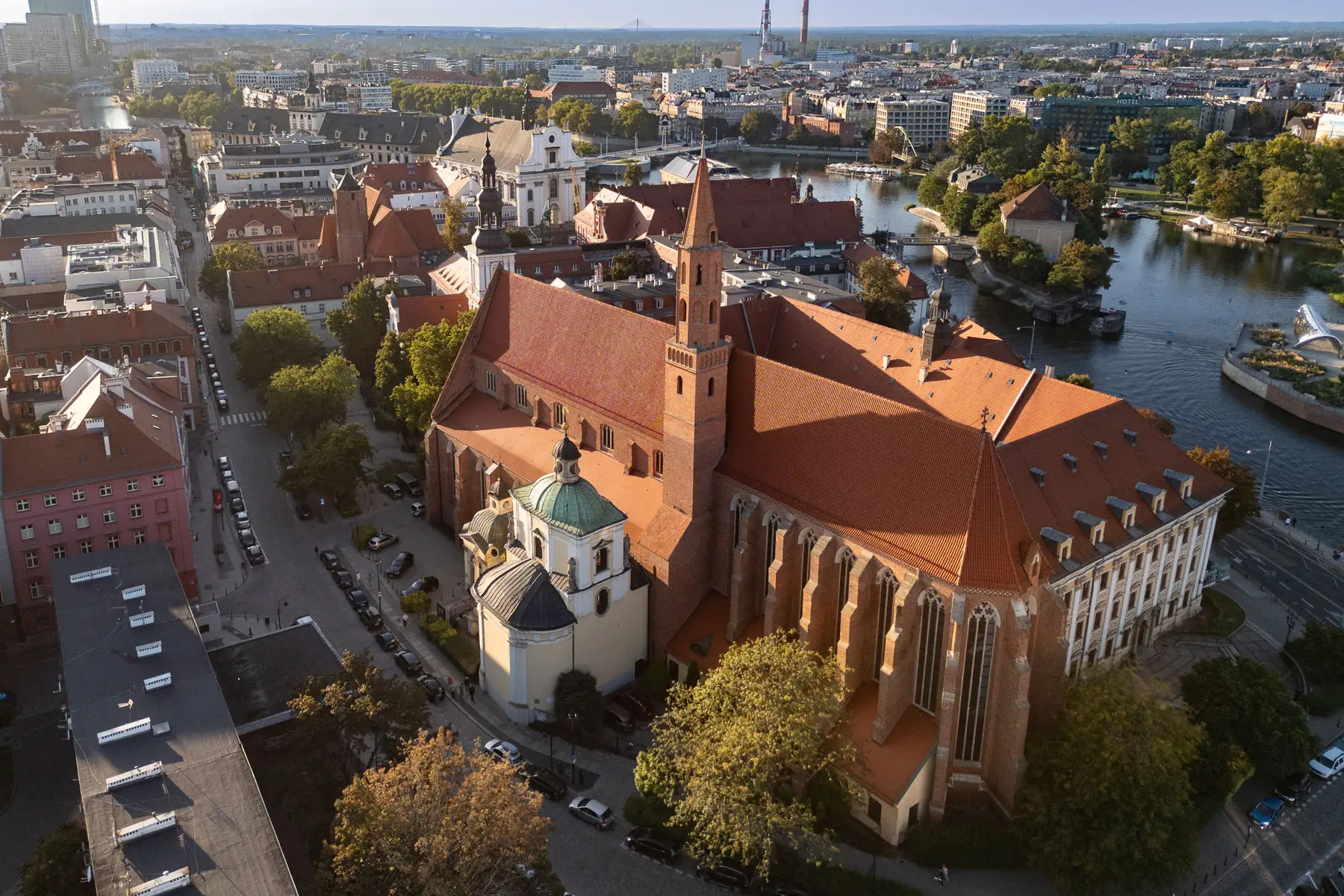
The history of the church dates back to the first half of the 13th century, when Duke Henry II the Pious brought the Franciscans to Wrocław and allocated them a plot of land near the ducal castle on the left bank of the Oder. Initially, a small monastery church was built here; as the order grew, it was replaced by a much larger Gothic building. Work on the building continued for over a hundred years, resulting in one of the earliest and most important churches of the mendicant orders in Silesia. Following the secularisation of monastic estates in 1810, the monastery ceased to fulfil its original purpose. In the second half of the 19th century, the complex was taken over by the Norbertine Sisters, and since the end of the 20th century, the church has served as the cathedral of the Wrocław-Koszalin Eparchy of the Greek Catholic Church in Poland.

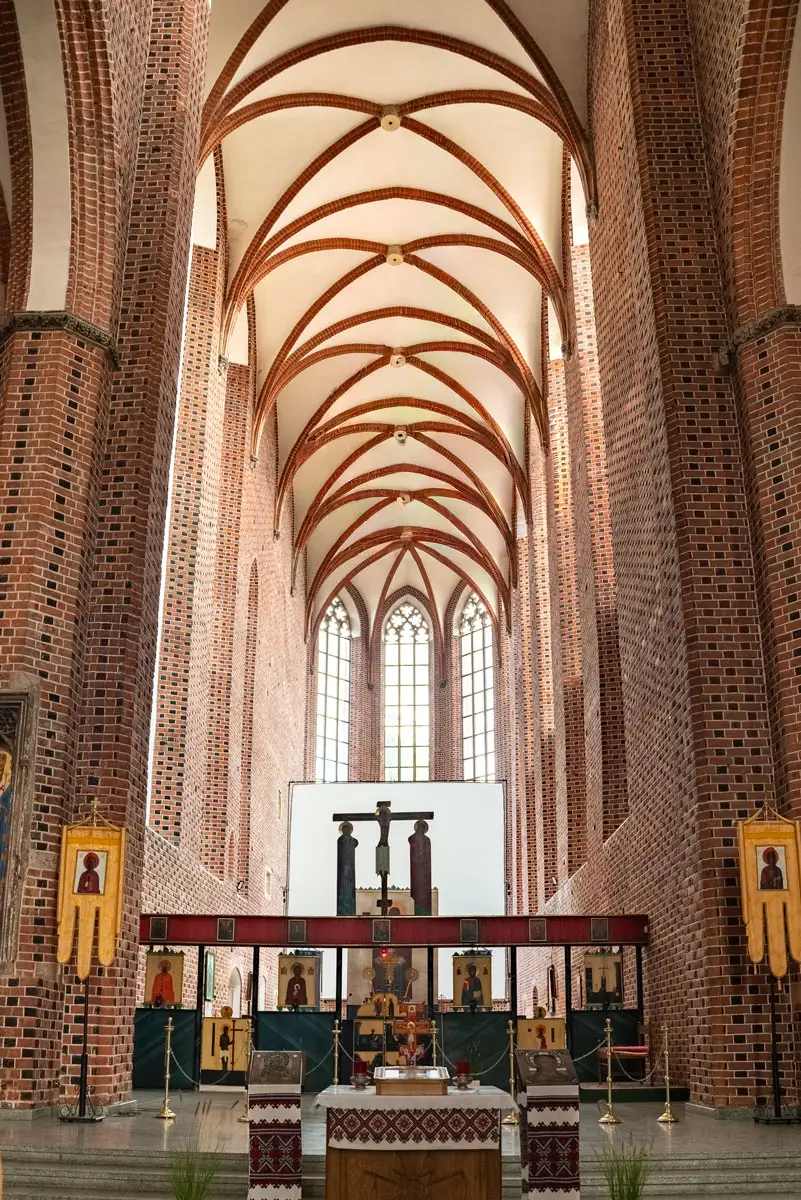
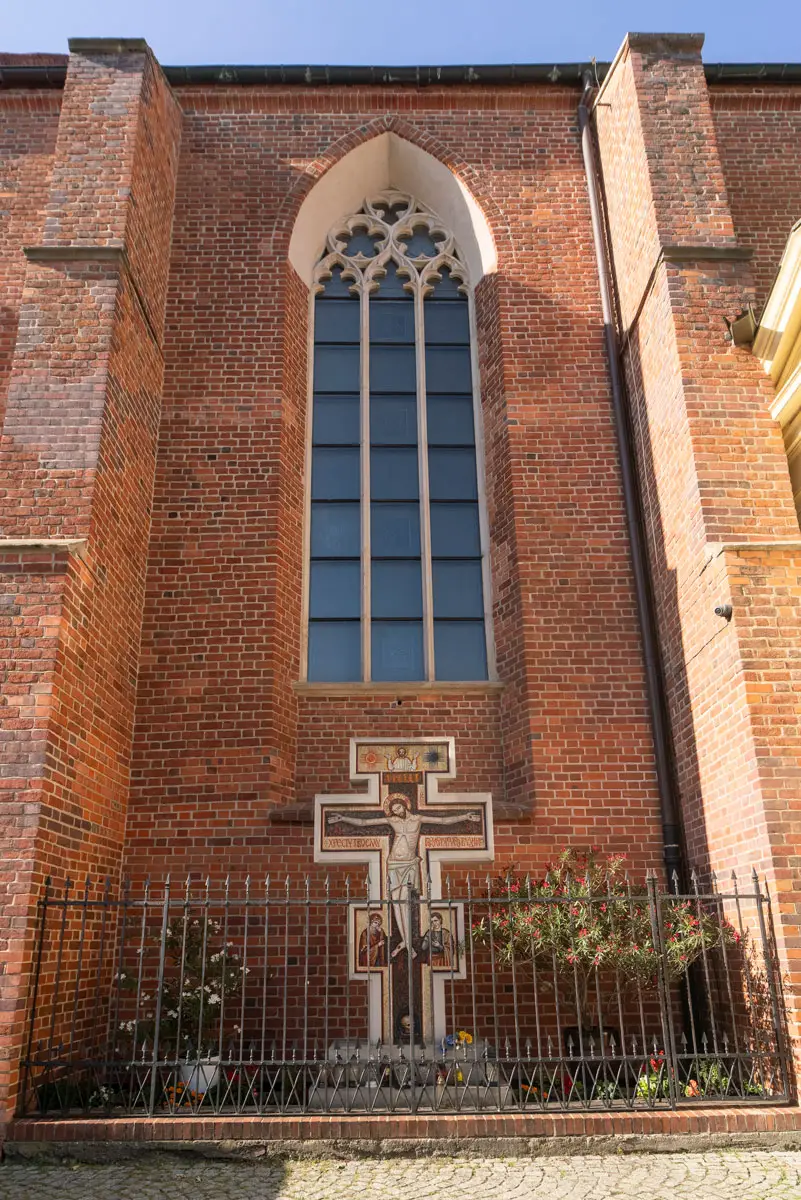
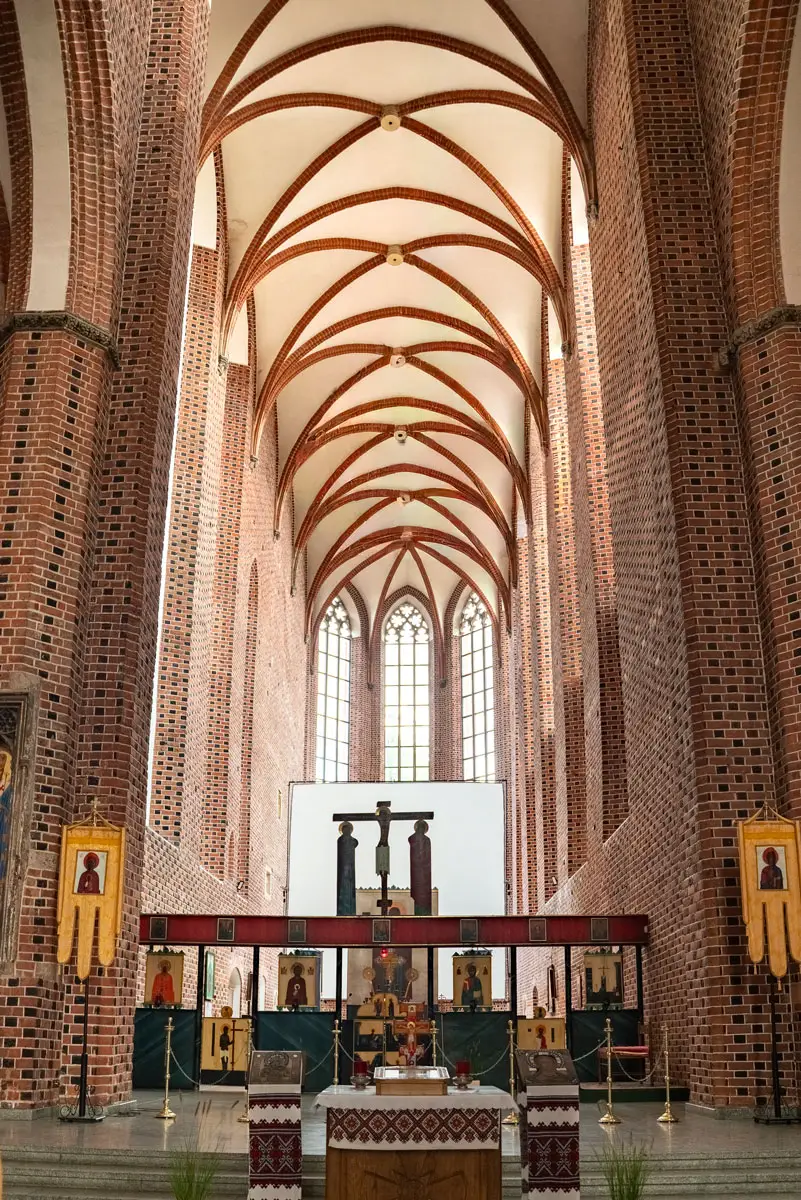
The architecture of the church perfectly reflects the ideals of Franciscan architecture. Instead of monumental towers and elaborate decorations, the design favoured a simple form, a spacious interior and an elongated chancel suited to monastic liturgy. Its slender proportions, ogival windows, buttresses and rib vaults form a harmonious whole, making it one of the best-preserved examples of early Gothic architecture in Silesia. Despite subsequent changes to the church’s furnishings and functions, its medieval layout has remained virtually unchanged, meaning that the original architectural design of the Franciscan monastery church can still be discerned today.

Over the centuries, the cathedral has witnessed many important events in the history of Wrocław. Members of the Silesian branch of the Piast dynasty were laid to rest within its walls, and the monastery was one of the city’s most important centres of religious and intellectual life. Today, Gothic architecture helps to create a unique setting for the liturgy of the Byzantine-Ukrainian Rite, lending the former Franciscan church a new dimension while preserving its historical and artistic heritage.


Most valuable historic buildings

Hochberg Chapel
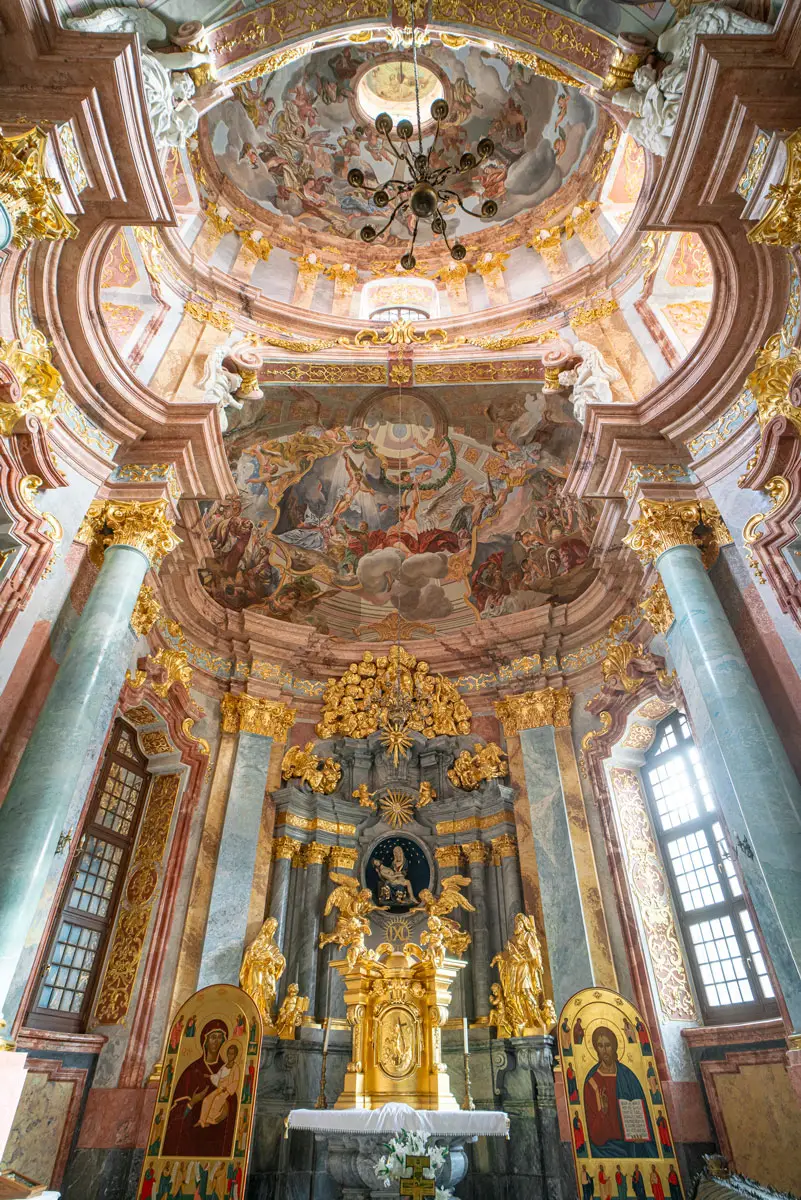
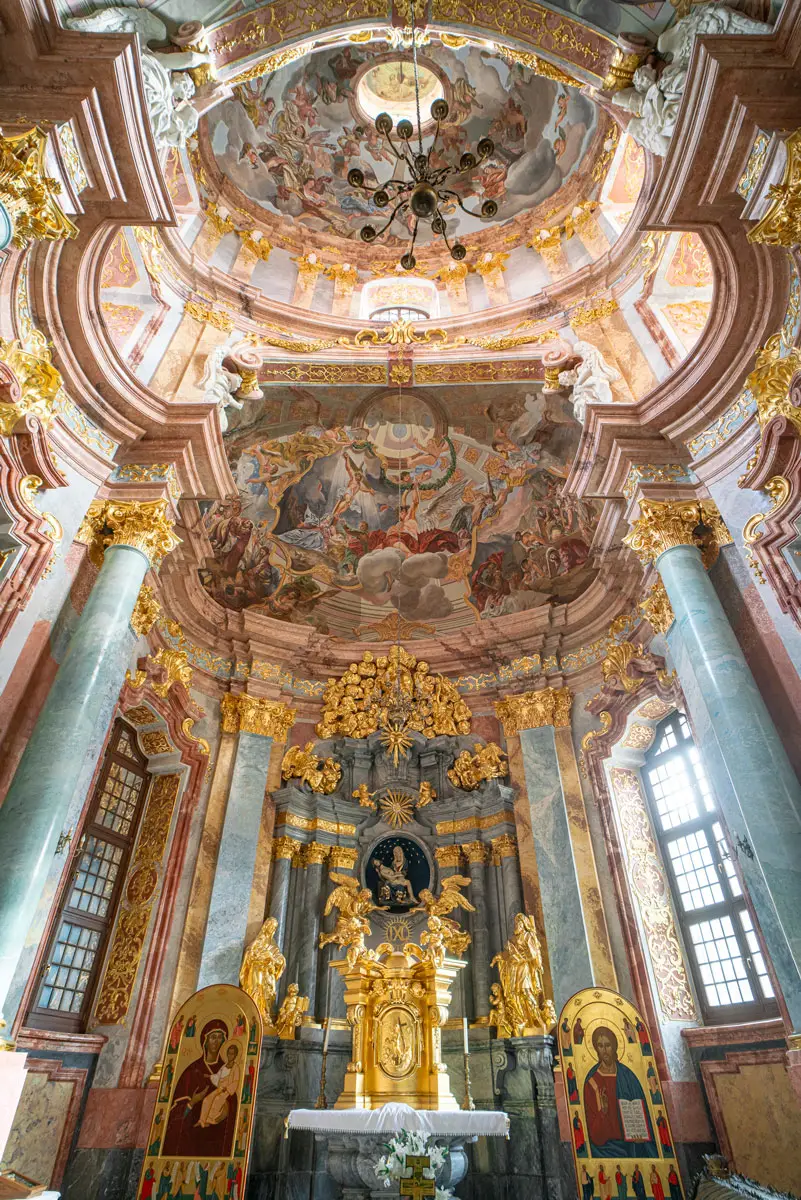
The Baroque Chapel of Our Lady of Sorrows, built between 1723 and 1728, was funded by Abbot Ferdinand Hochberg, who designated it as his final resting place. Its interior is adorned with elaborate frescoes depicting scenes from the life of the Virgin Mary, sculptural decorations and a monumental grille. The centrepiece of the altar is a valuable 15th-century Pietà. The chapel was almost completely destroyed in 1945, and its Baroque interior was painstakingly reconstructed between 2001 and 2013.

The church’s Gothic architecture
The church’s Gothic architectural structure remains the most valuable testament to its medieval history. The present church is a monumental, three-nave basilica with an exceptionally long chancel, characteristic of the architecture of the mendicant orders. The surviving elements of the medieval structure provide an insight into the successive stages of the church’s expansion in the 14th and early 15th centuries, as well as its original Franciscan character.

Interesting fact

The Church of St Vincent and St James was the burial place of Duke Henry II the Pious, who was killed in the Battle of Legnica in 1241. His medieval tombstone, depicting the duke with a distinctive figure of a Mongol at his feet, is no longer in the church – it is currently on display at the National Museum in Wrocław, as part of the permanent exhibition ‘Silesian Stone Sculpture, 12th–16th Centuries’. It is one of the most important examples of medieval sepulchral sculpture in Silesia and an extremely valuable testament to the memory of the Piast duke.

WROt EN-biały

Wrocław Tourism Organisation
ul. Wystawowa 1
(Budynek IASE, pokój 207)
51-618 Wrocław

Contact us
+48 534 766 862
wrot@wroclaw.travel

Content: Albin Marciniak  |  Edited by:  Krystyna Kaługa  |  Photographs: Hipolit Terpiński  |  Design: Grafika Polska