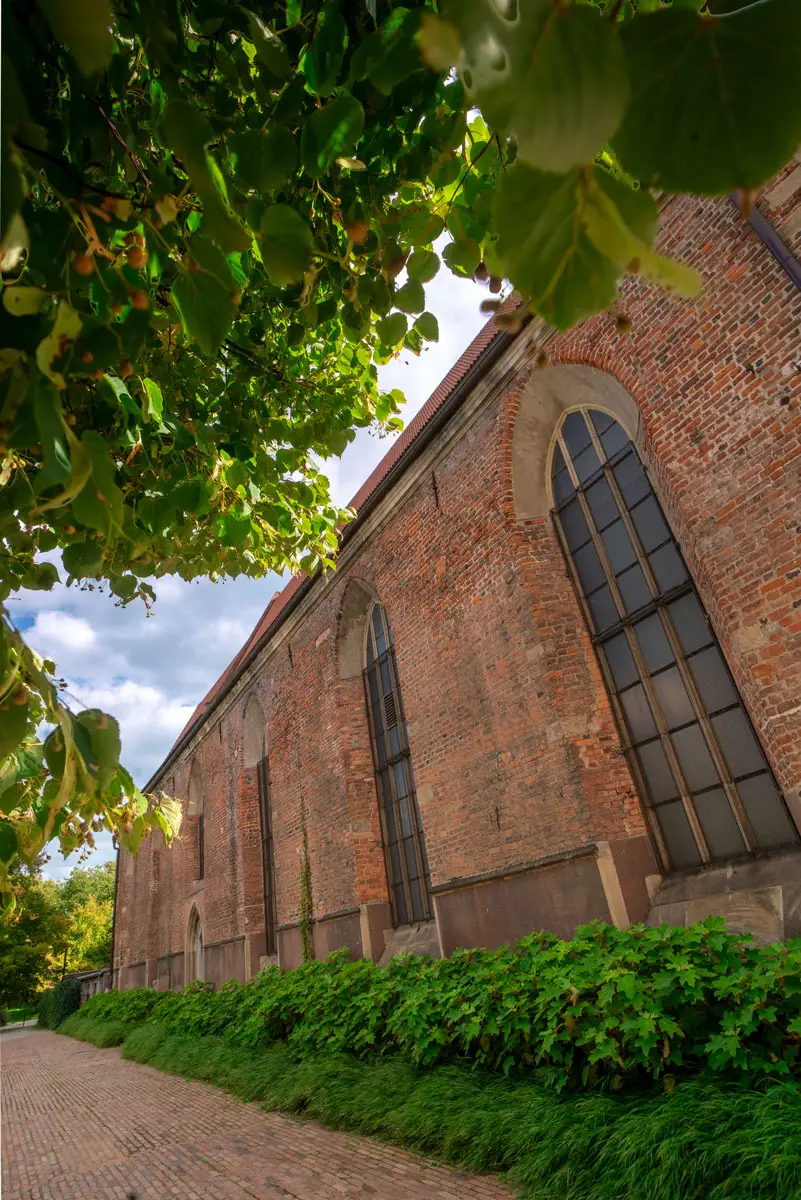
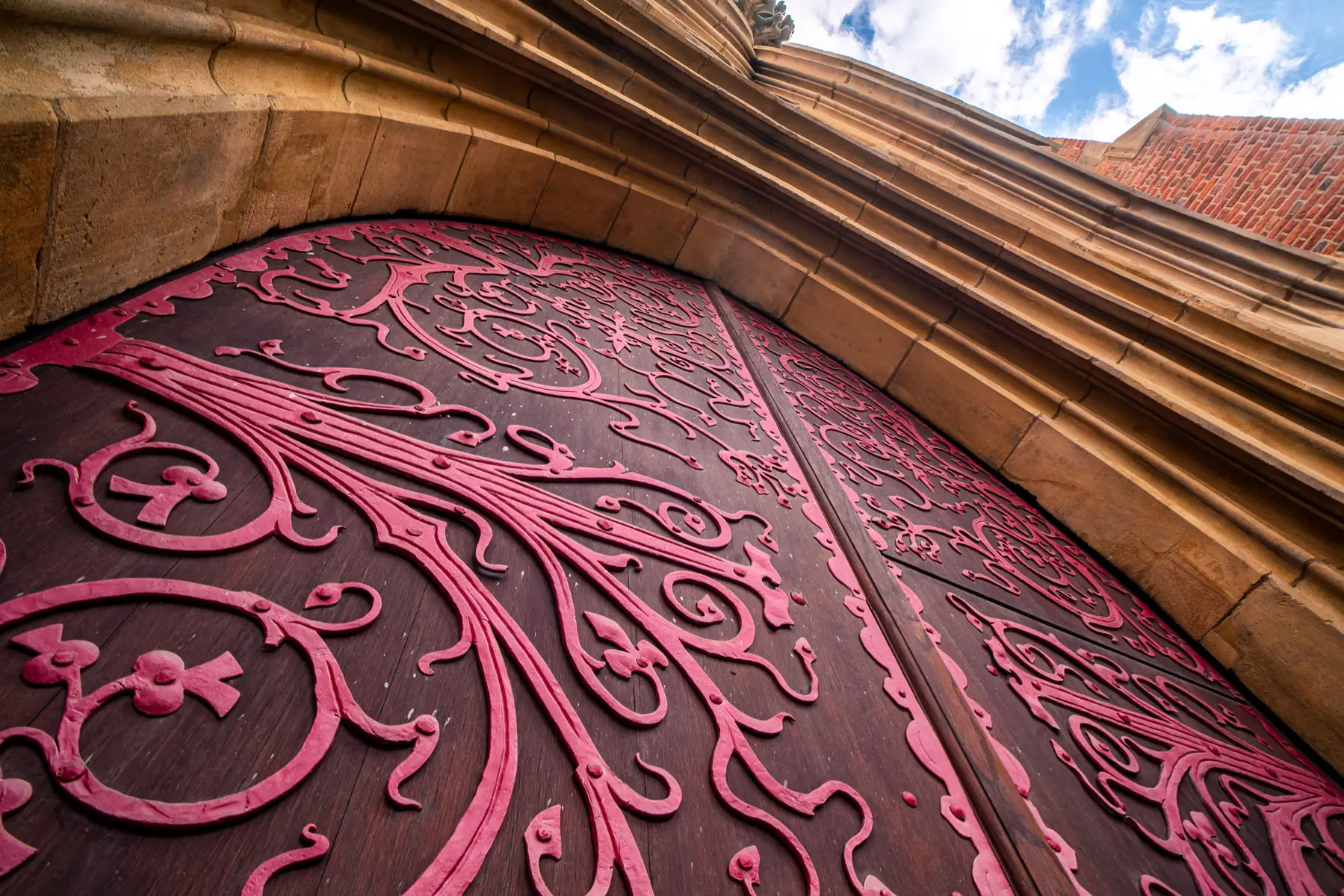
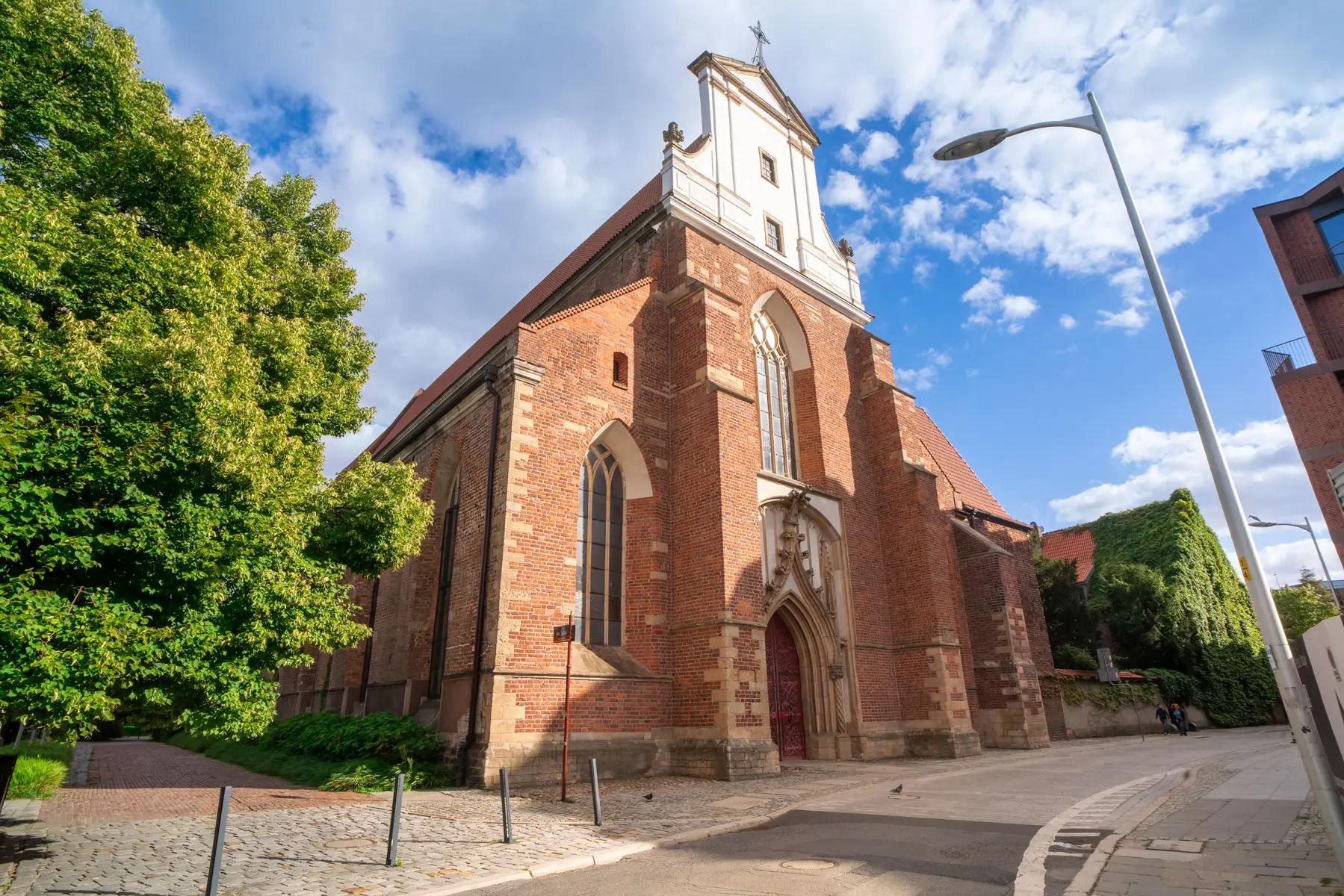
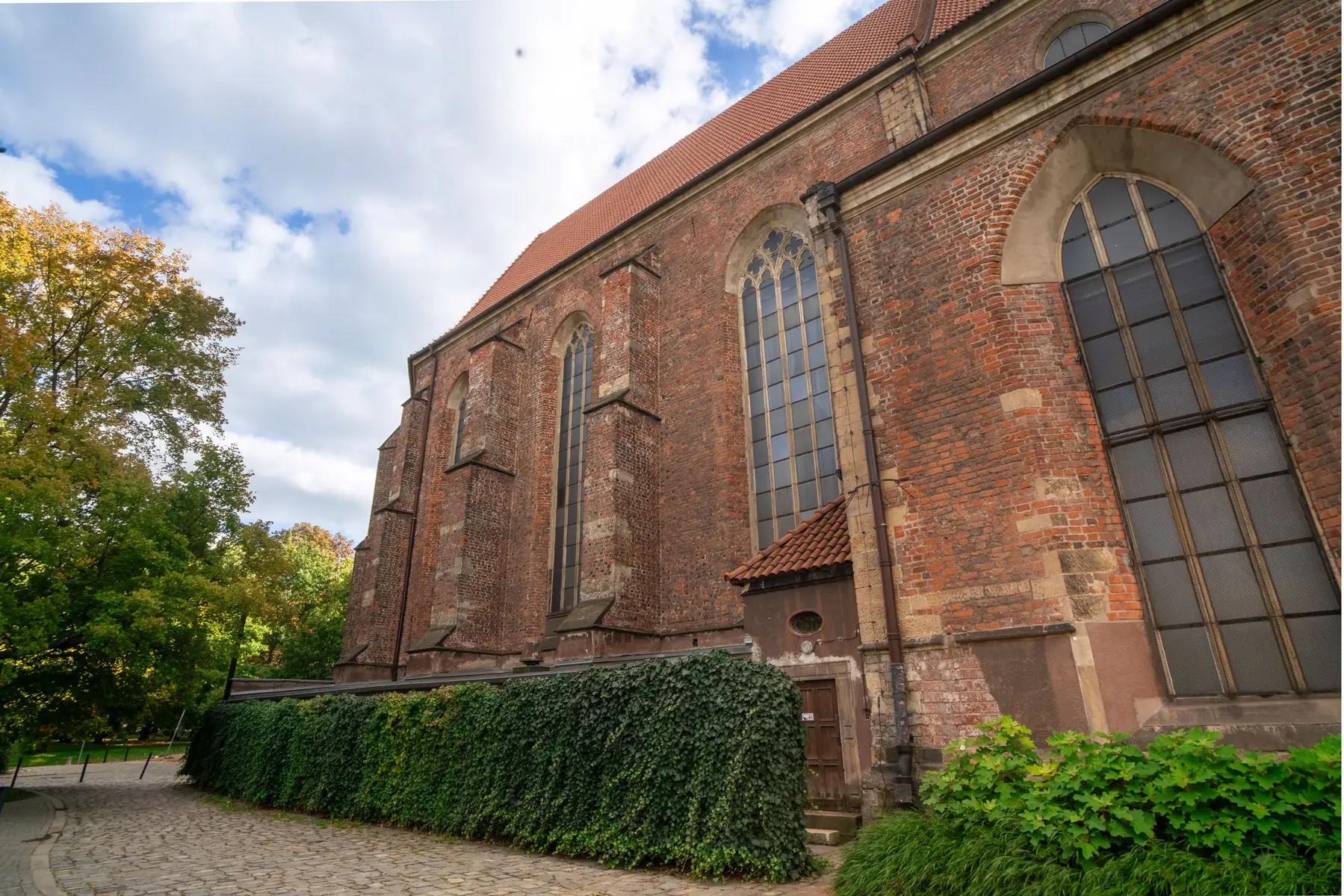
The former Bernardine monastery is one of the most important surviving examples of late-Gothic monastic architecture in Wrocław. The origins of the complex are linked to the arrival in the city in 1453 of the Bernardines – an Observant branch of the Franciscan Order – who were brought here on the initiative of St John of Capistrano. The first buildings were made of wood, and the brick church and monastery were built in stages from the second half of the 15th century. A three-nave basilica was built at that time, together with an adjoining four-sided monastic complex featuring cloisters and a garth.
The architecture of the complex represents the model of an Observant monastery characteristic of the late Middle Ages. The brick walls, Gothic cloisters, vaults and the compact layout of the buildings around the inner courtyard were all designed to serve the needs of the monastic community. It is worth bearing in mind, however, that the complex’s current appearance is also the result of post-war reconstruction. During the Second World War, the buildings were severely damaged, and reconstruction work started the 1960s, carried out according to designs by Edmund Małachowicz, continued until 1974.
A fundamental change in the history of the complex took place as early as the Reformation period. In 1522, the Bernardines left Wrocław, and a municipal hospital was established in the monastery buildings.The monastery part housed the hospital premises, and once the complex had been taken over by the municipal authorities, its function changed completely. The church was subsequently handed over to the Lutherans. Thus, the medieval monastery ceased to be a monastic house after only about seven decades of the Bernardine community’s existence.
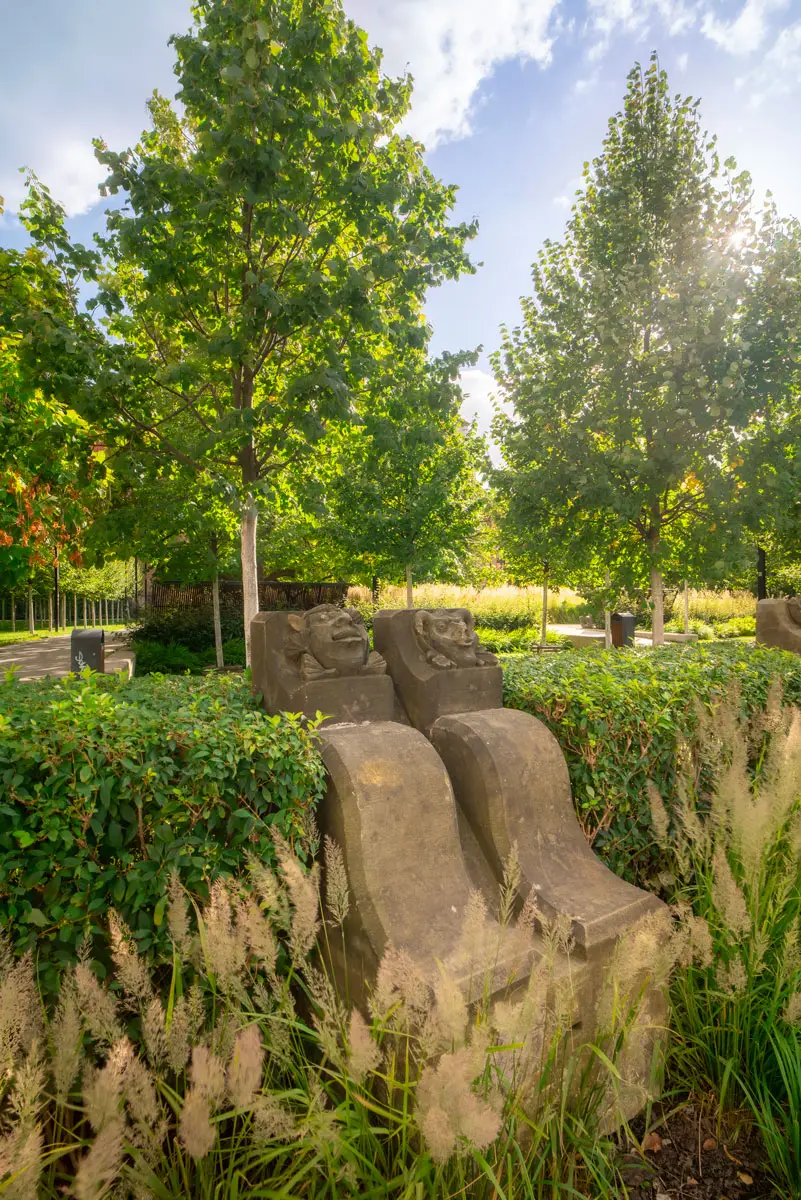
Since 1965, the former monastery complex has been home to the Museum of Architecture in Wrocław, the only museum in Poland devoted entirely to the history of architecture and contemporary architecture. Of particular value is the preserved complex of Gothic cloisters, which houses a lapidarium and the Romanesque Hall, featuring architectural details taken, among other sources, from Wrocław’s buildings destroyed during the war.