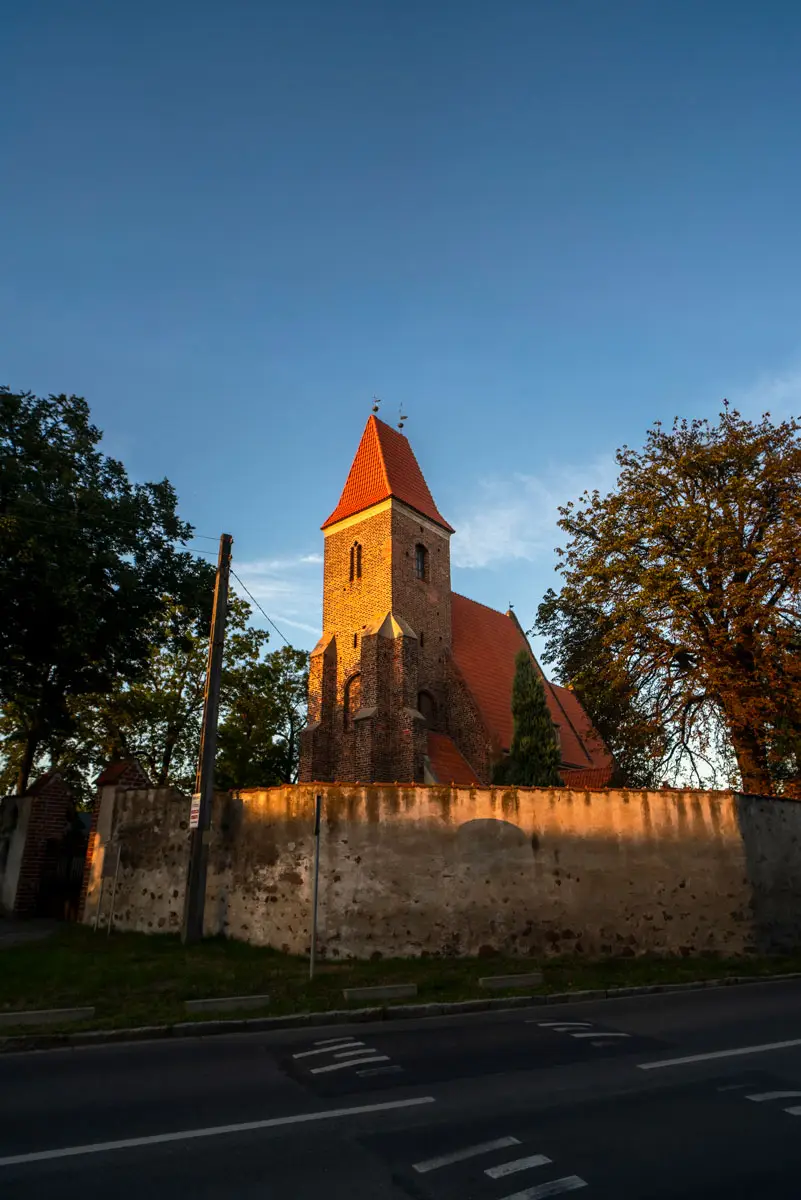
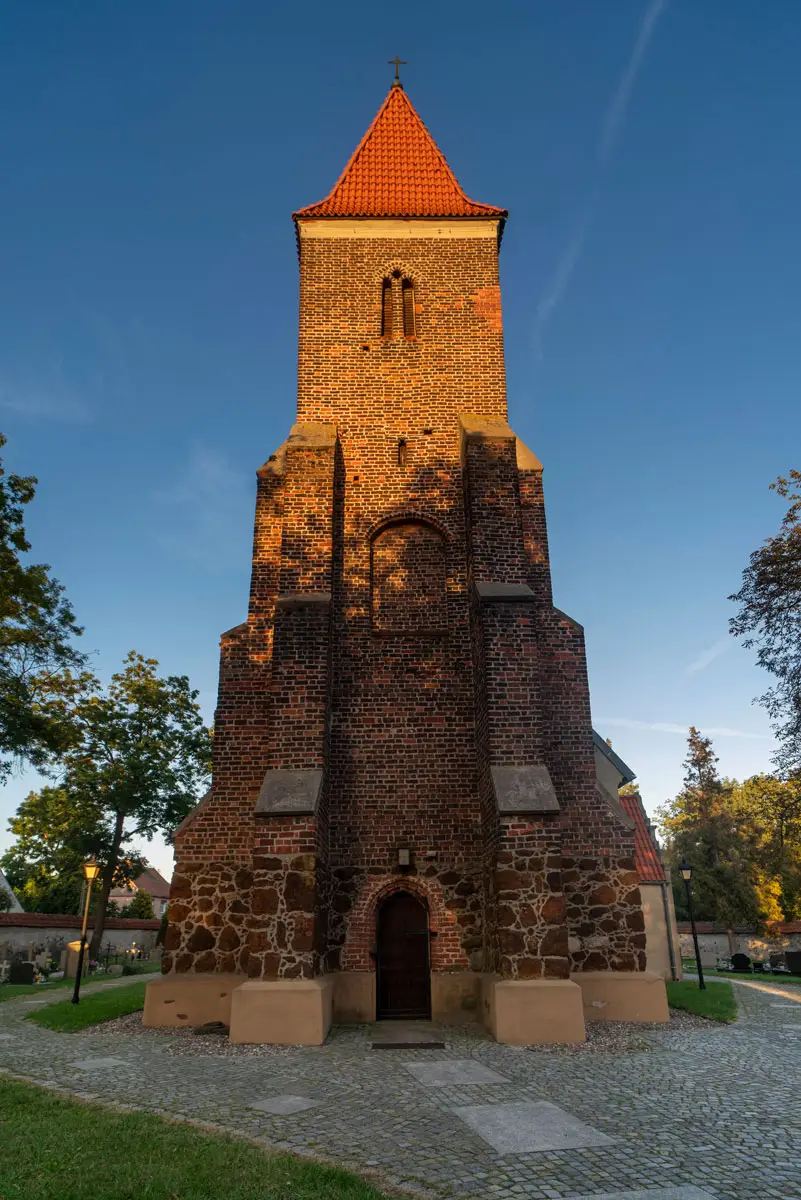
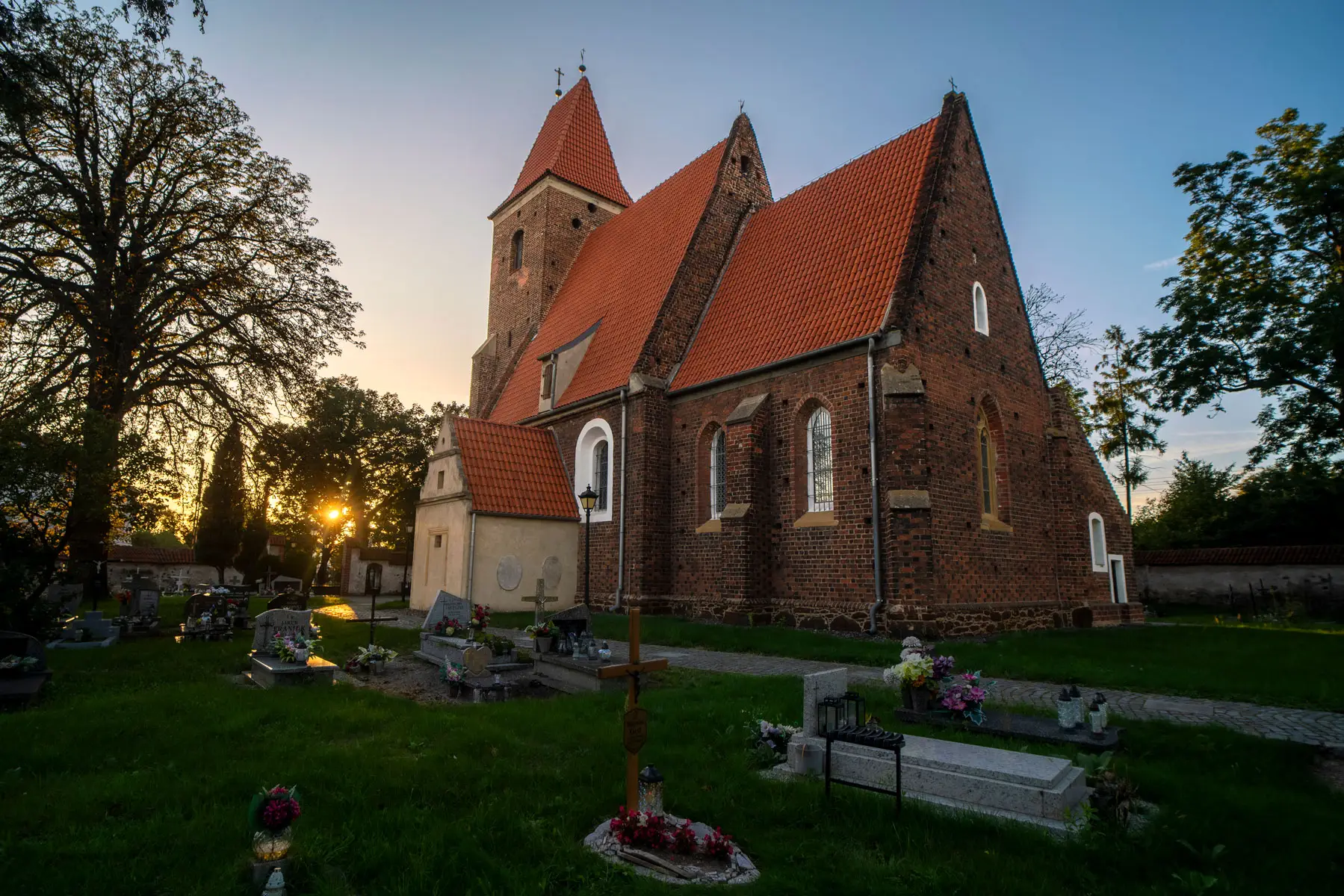
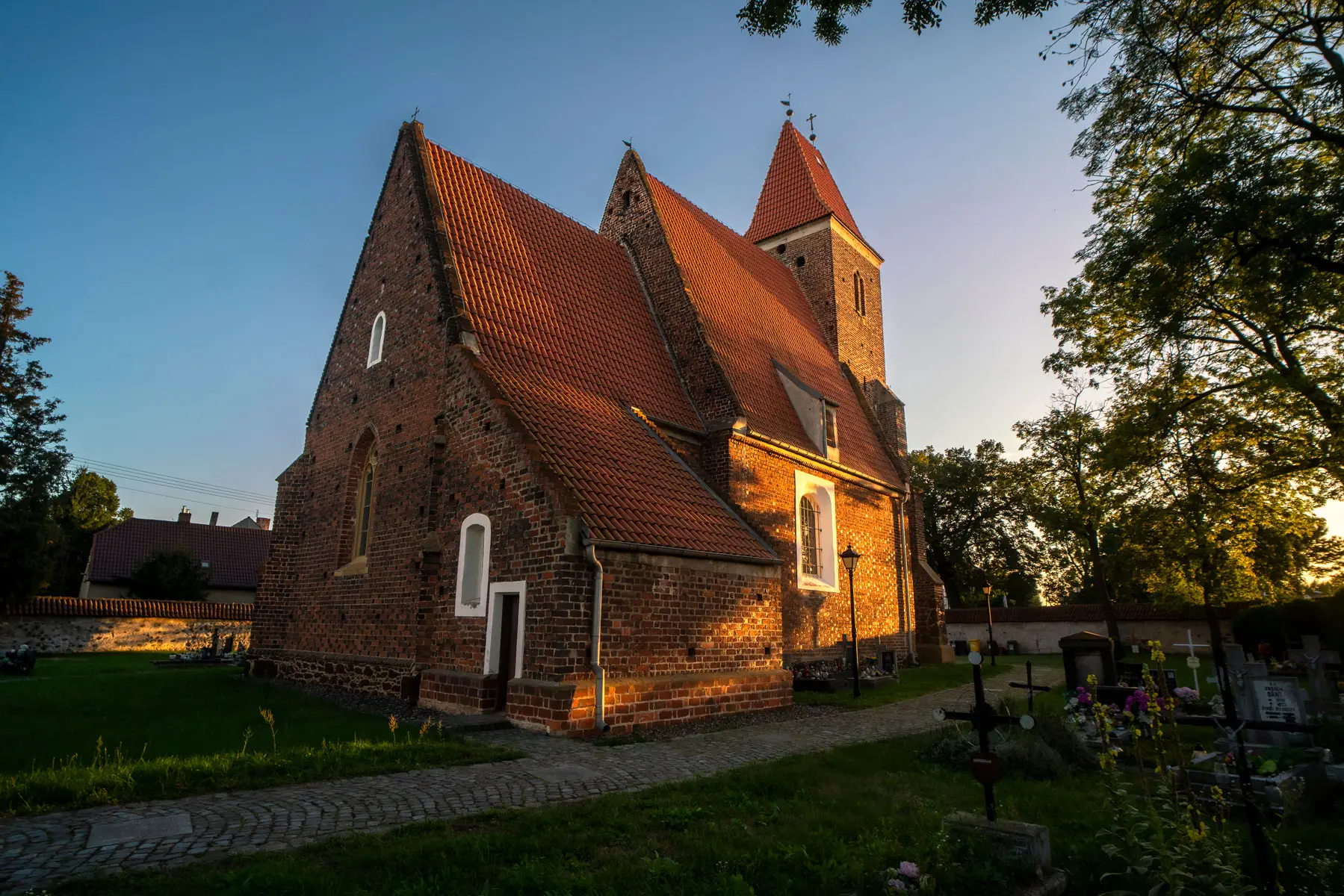
The Church of St Hedwig is the oldest historic building in what was once Jerzmanów, the origins of which date back to a medieval settlement that developed to the west of Wrocław. Built in the 14th century as a parish church, it has been the centre of the local community’s religious and social life for centuries. Despite subsequent alterations, it has retained its distinct Gothic form and is one of the best-preserved examples of medieval rural architecture within the boundaries of modern-day Wrocław.
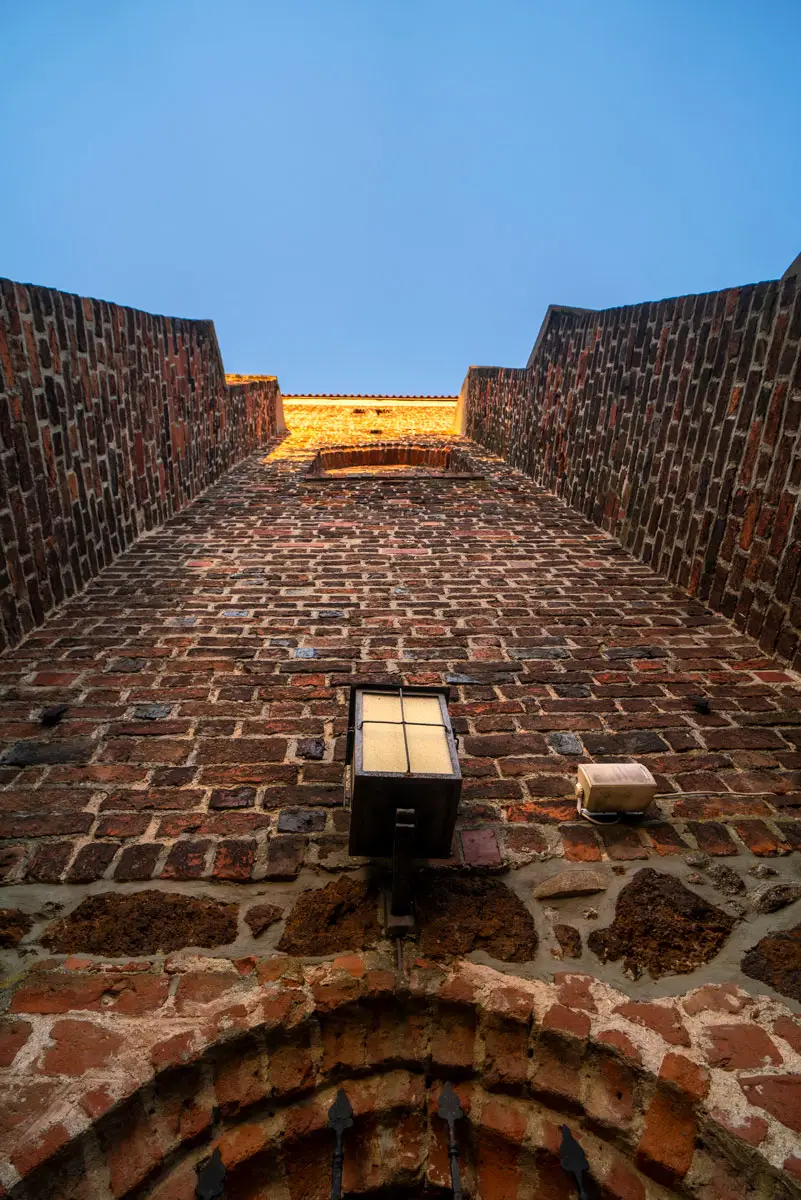
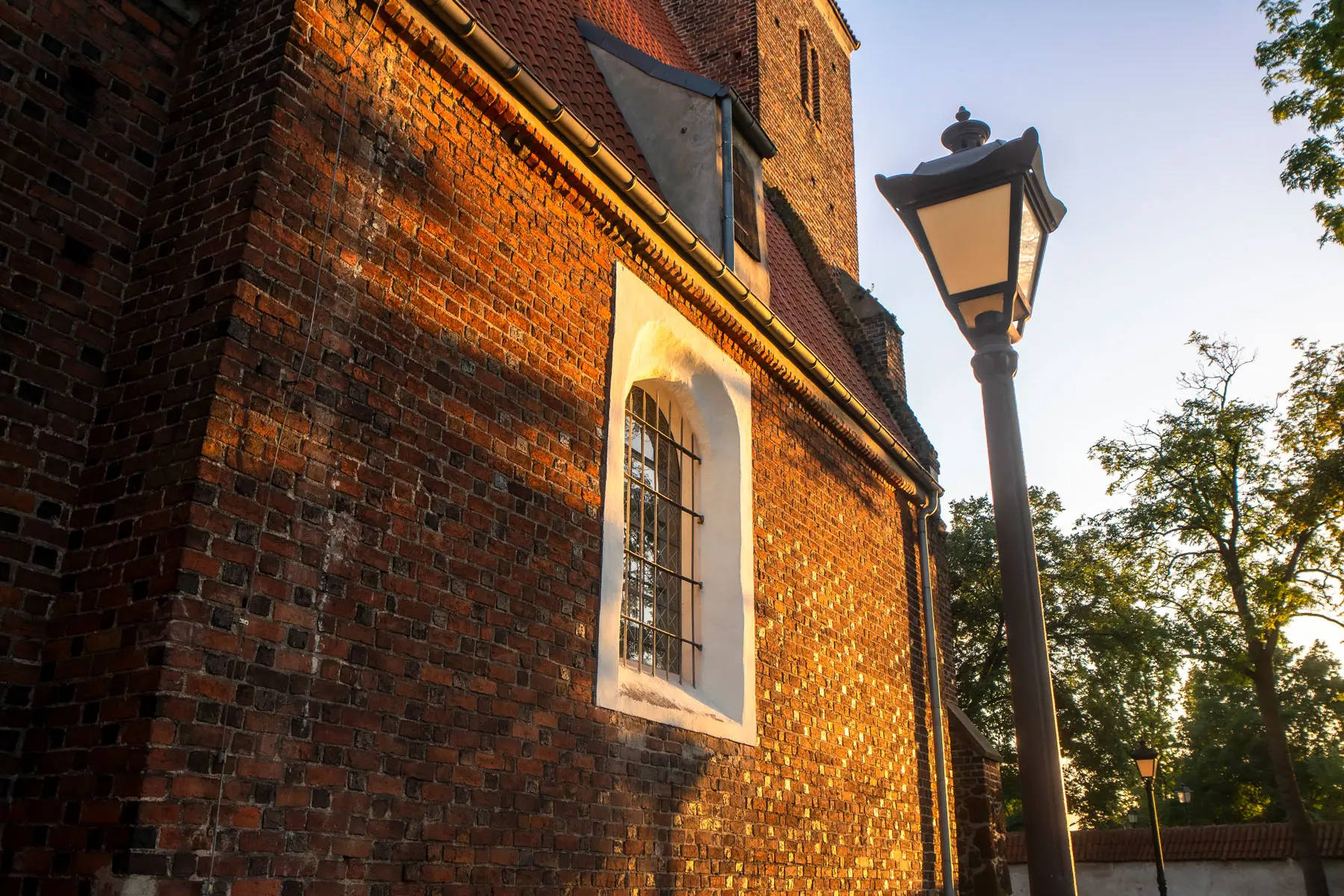
The building exemplifies the characteristic features of Silesian parish architecture. The single-nave structure with a distinct chancel, brick façades, ogival windows and a system of buttresses create a simple, harmonious composition, devoid of the grandeur found in urban churches. The simplicity of the architecture stemmed from the church’s purpose, which was to serve a small rural community. It is precisely this authenticity and the preservation of the fundamental characteristics of Gothic architecture that constitute its greatest value today.
For centuries, the church has remained a constant feature of the landscape of Jerzmanów, bearing witness to the village’s development and the changes taking place in the suburbs of Wrocław. Even after the village was incorporated into the city, the church did not lose its local character, continuing to serve as a reminder of the medieval roots of this part of the capital of Lower Silesia. It is an example of architecture which, despite the passage of time, has retained its original function and historical identity.