Collegiate Church of the Holy Cross and St Bartholomew
Construction period:
1288–1350
Founder:
Duke Henry IV Probus
Building type:
Roman Catholic Collegiate Church
Location:
1 Kościelny Square
Collegiate Church of the Holy Cross and St Bartholomew
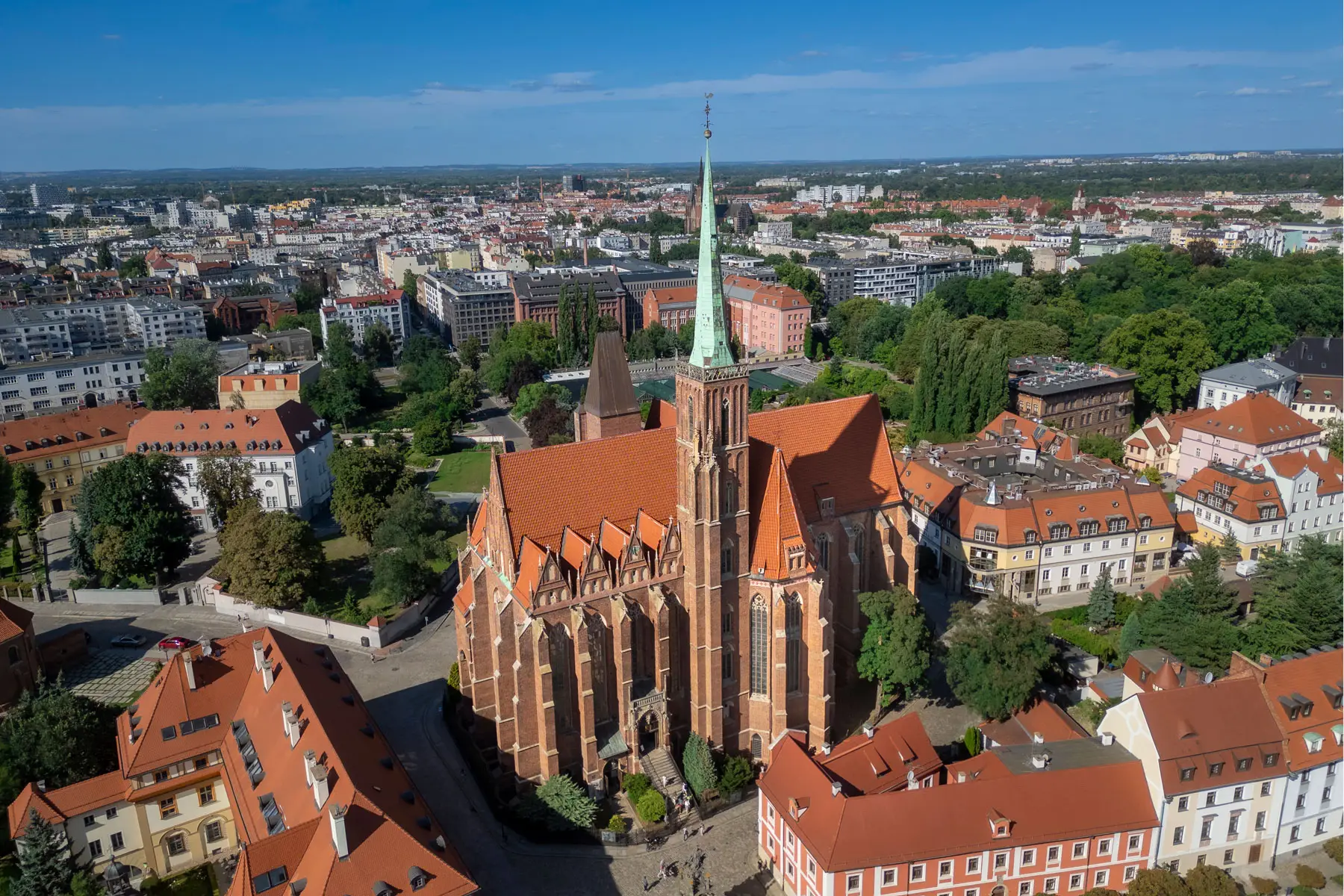
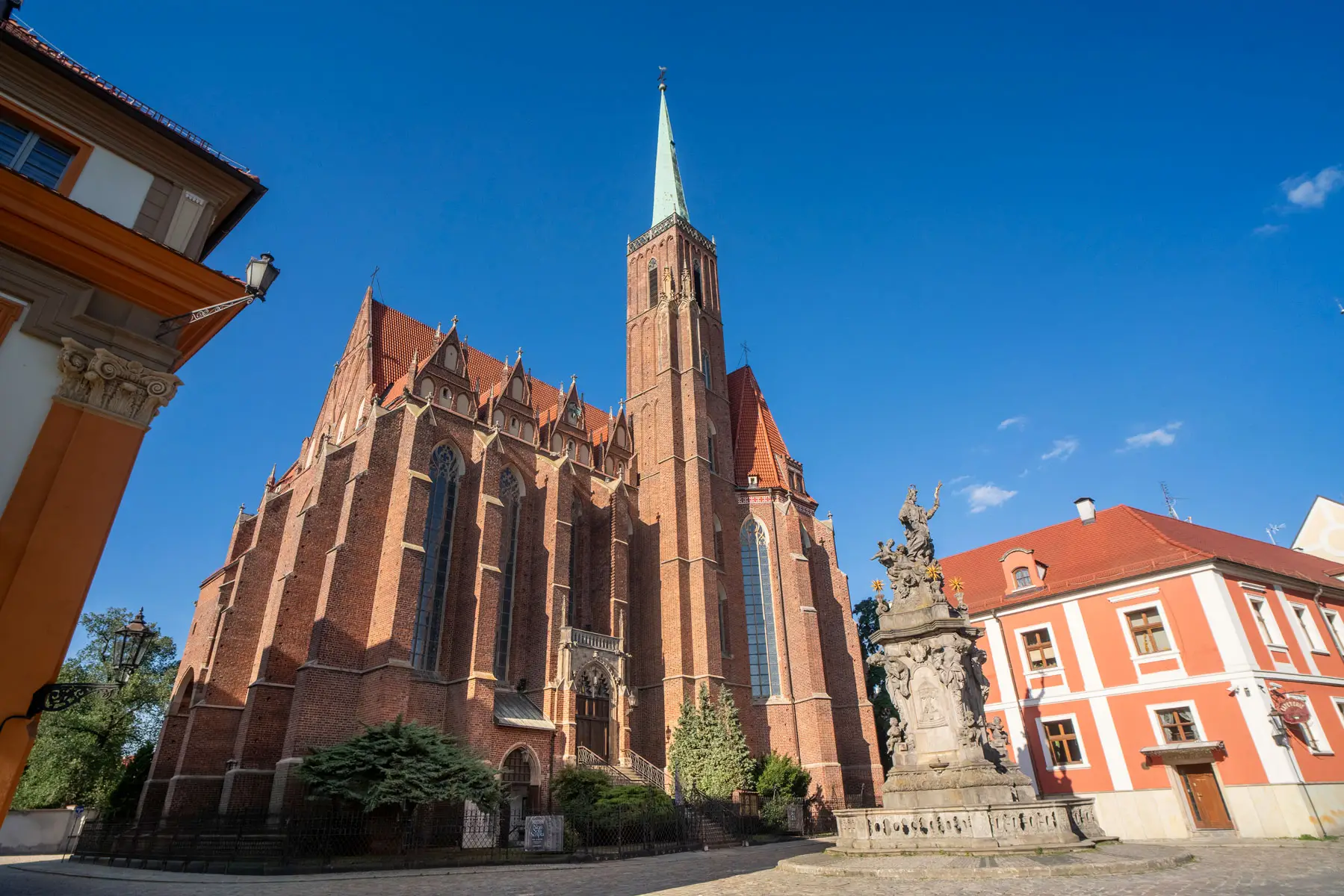
Construction of the collegiate church began in 1288, funded by Duke Henry IV Probus, one of the most distinguished rulers of medieval Silesia. The church was intended to serve as a building funded by the duke in the most prestigious part of Ostrów Tumski, highlighting both the founder’s religious ambitions and his political aspirations regarding the crown of the Kingdom of Poland. After his death, the duke was buried in the church’s crypt, and the collegiate church itself remained one of the most important places of worship and remembrance of the Silesian Piast dynasty for centuries to come.
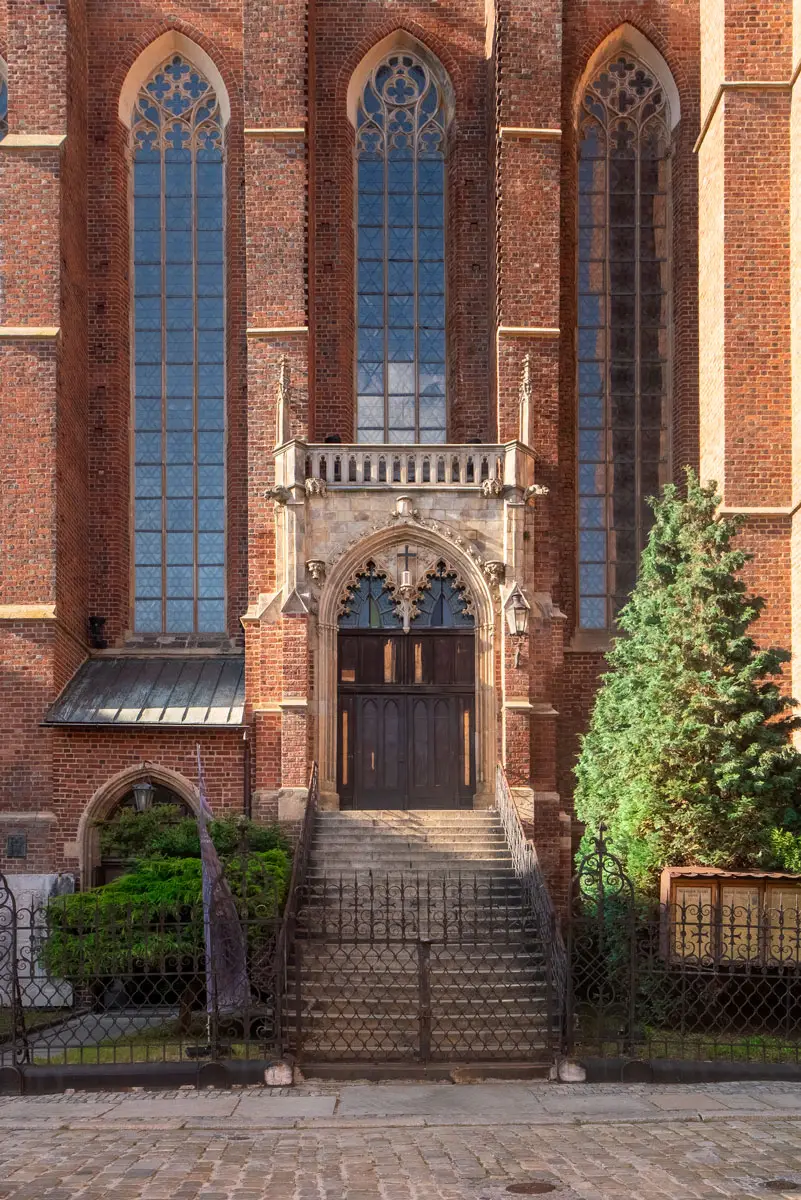
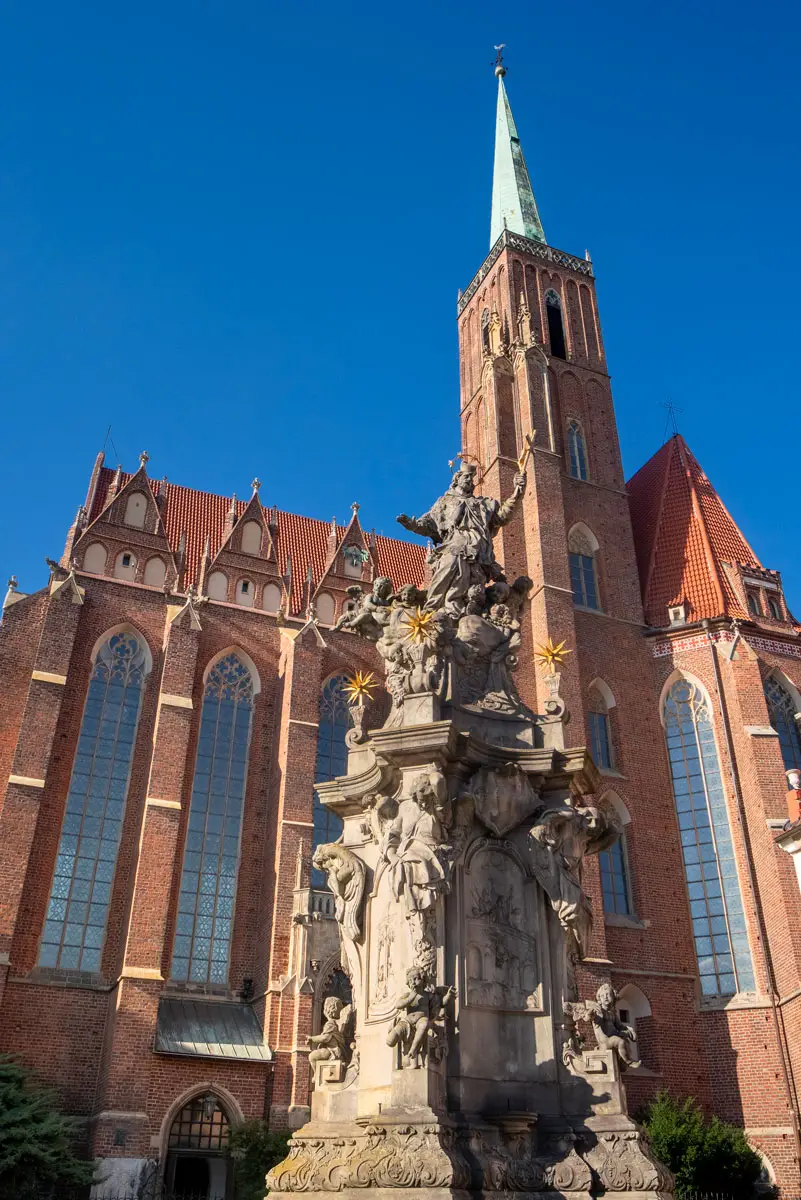
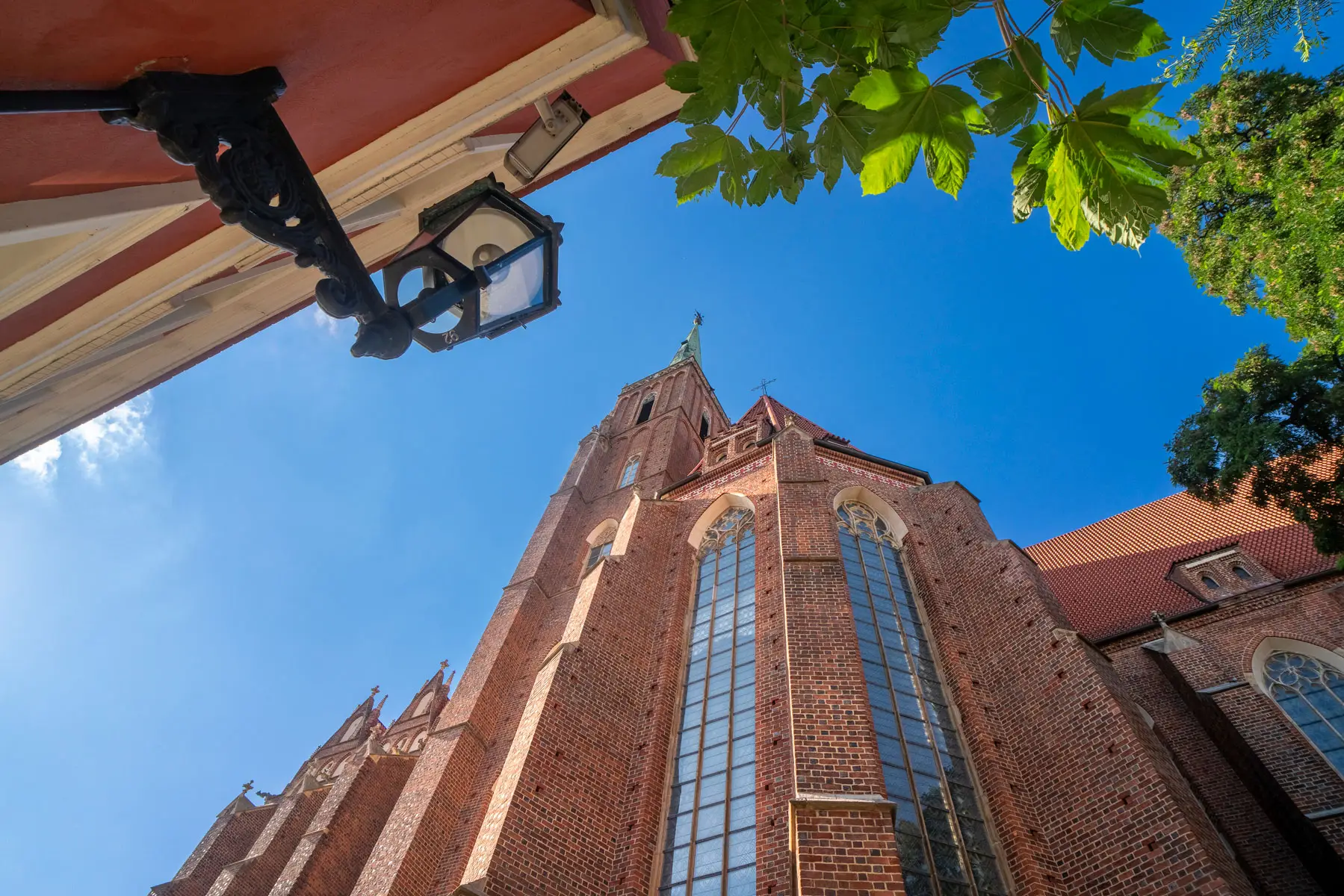
The architecture of the church is one of the most original achievements of the Gothic style in Poland. It is the only two-storey Gothic church in Poland to have been preserved on this scale. Its lower storey is dedicated to Saint Bartholomew, and its upper storey is dedicated to the Holy Cross. The monumental buttresses, slender ogival windows and intricately carved stonework emphasise the stately character of the building funded by the duke. Particularly notable is the high chancel and the harmonious proportions of the building, which are among the finest examples of Silesian Gothic architecture from the late 13th and first half of the 14th centuries.
Like many of Wrocław’s historic buildings, the collegiate church suffered damage during the fighting in 1945, but it was carefully rebuilt in keeping with its original form. Today, it is one of the most valuable medieval buildings in Ostrów Tumski and a unique testament to the funding ambitions of Henry IV Probus. Thanks to its remarkable design and high architectural standard, it holds a special place not only in the history of Wrocław, but also in the history of Gothic architecture in Central Europe.
Most valuable historic buildings
Tympanum showing the founder – Throne of Grace In the upper church, a unique stone tympanum of the Throne of Grace type has been preserved, depicting the Holy Trinity being adored by Duke Henry IV Probus and his wife Matilda. The work dates from around 1350, the time when the construction of the collegiate church was completed. Of particular interest is the composition that combines the classic motif of the Throne of Grace with a depiction of the mystical cross in the form of the Tree of Life. It is one of the finest examples of medieval architectural sculpture in Wrocław.
Gothic keystones and sculpted architectural details The interior of the collegiate church has also retained numerous medieval stonework details, which bear witness to the high standard of Gothic construction craftsmanship. Particular attention should be paid to the Gothic keystones of the vaults, including the keystone depicting Saint Hedwig holding a model of the church, and the keystones featuring heraldic motifs – the Piast eagle and the Bohemian lion. Their significance goes beyond mere decoration: they link the church’s artistic programme to its founder, the history of ducal Wrocław, and the political and dynastic context of medieval Silesia.
Interesting fact:
The church was intended to be a monument to the ducal funding and a place to commemorate the family of Henry IV Probus. Following the duke’s death in 1290, he was buried in the collegiate church in accordance with his will. His monumental sarcophagus stood in the chancel of the upper church for centuries.