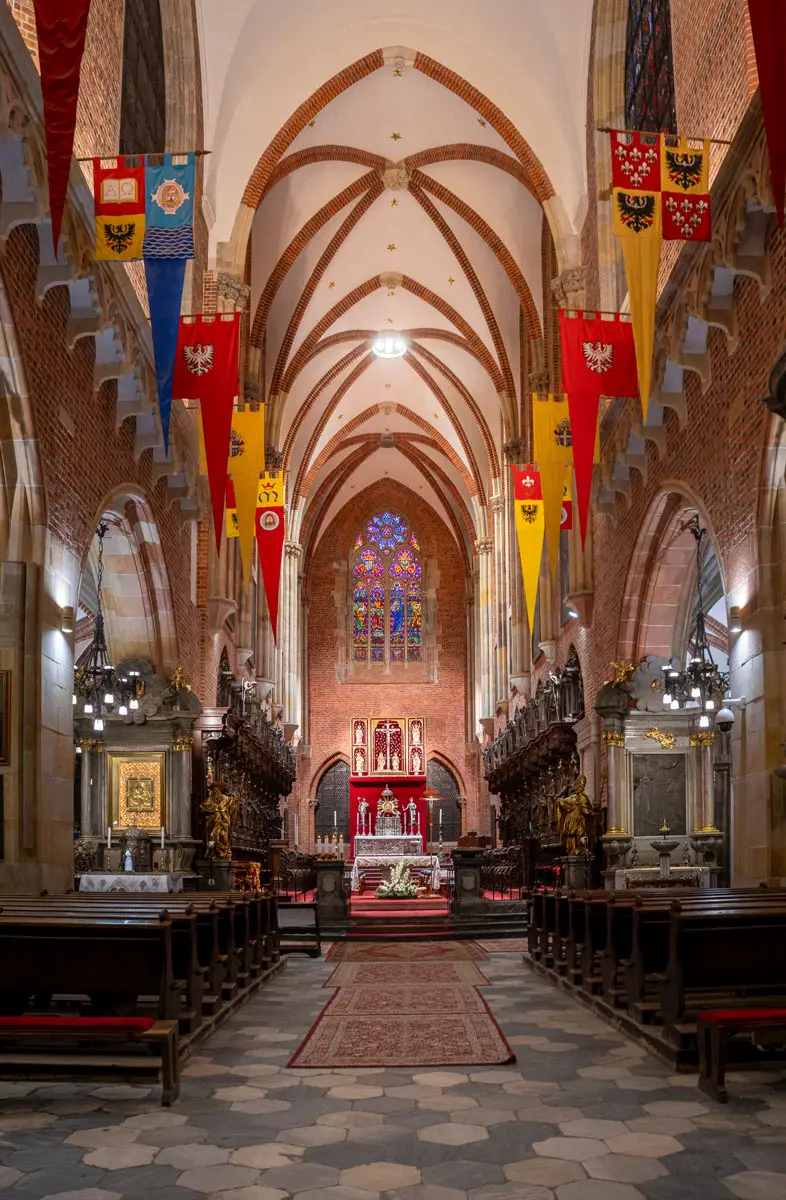
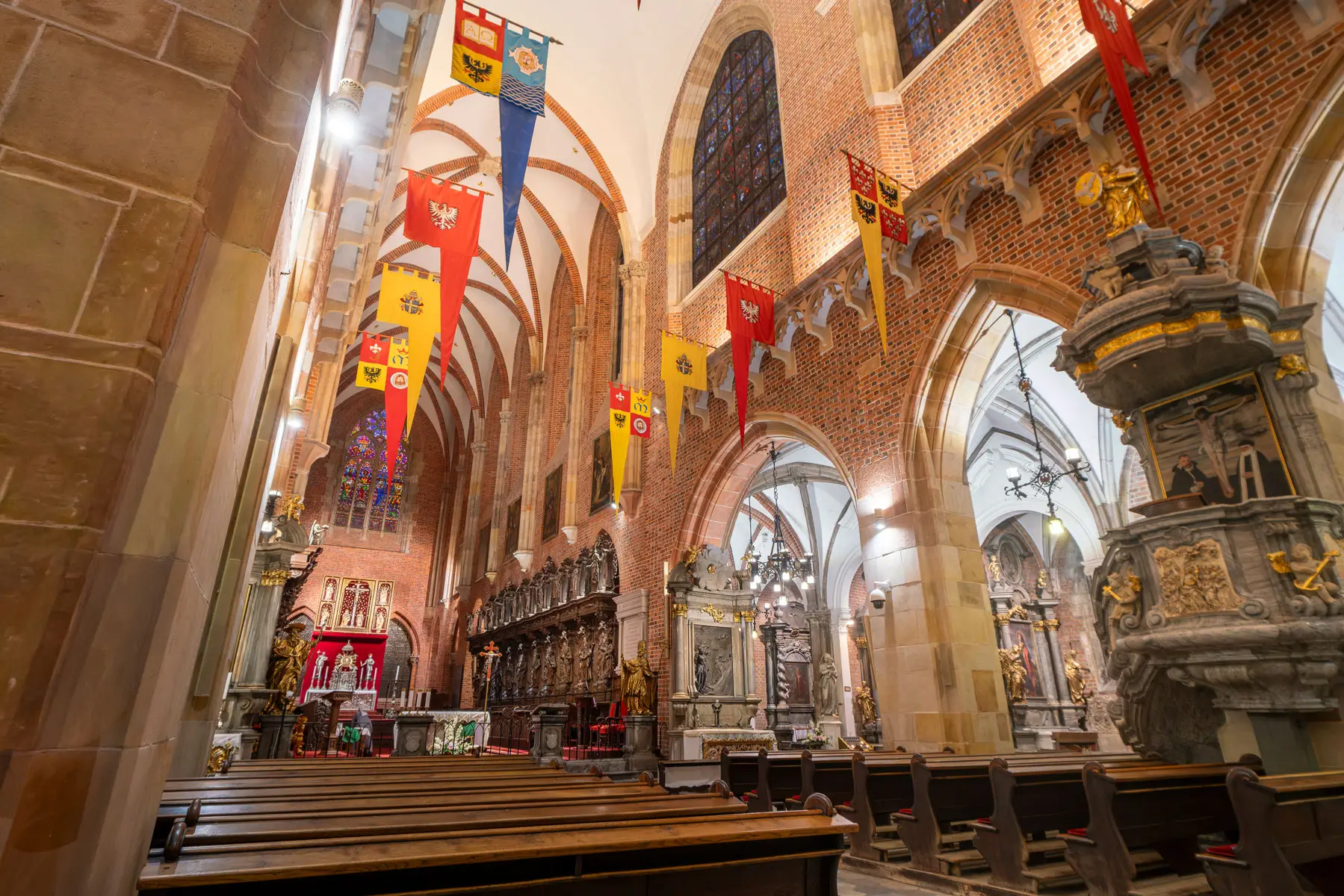
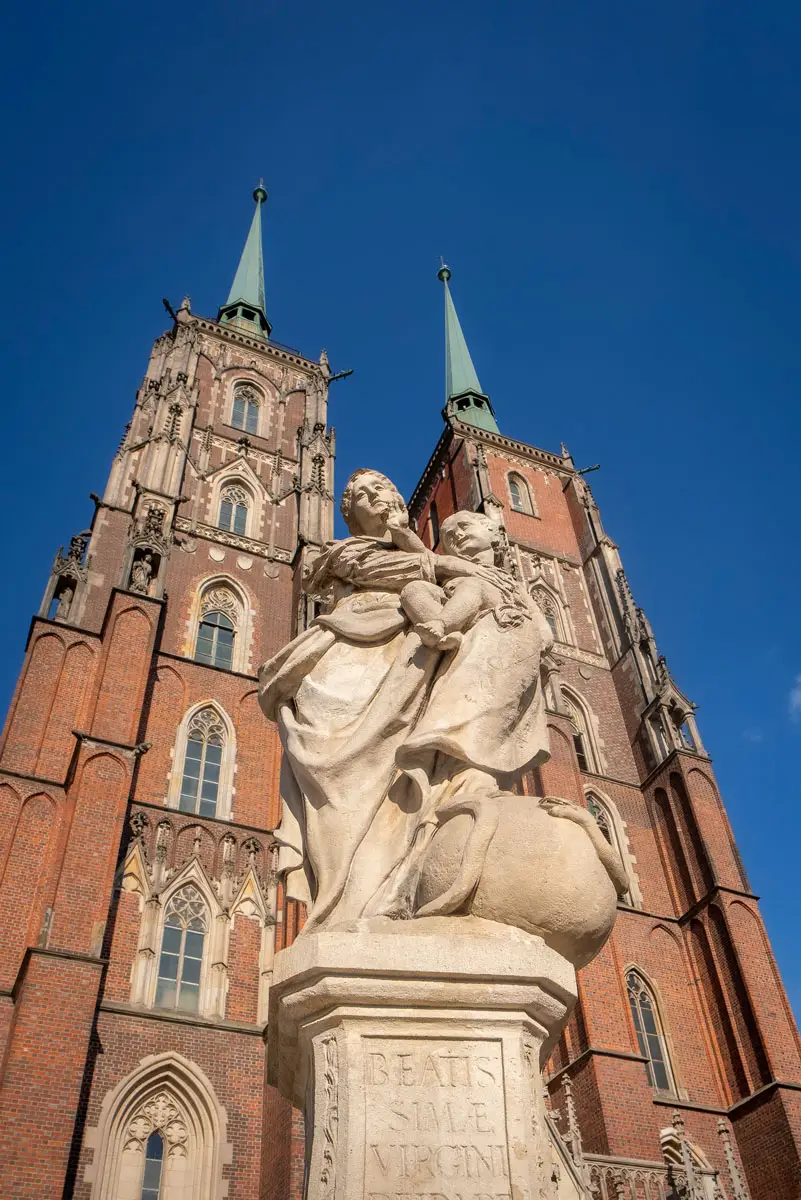
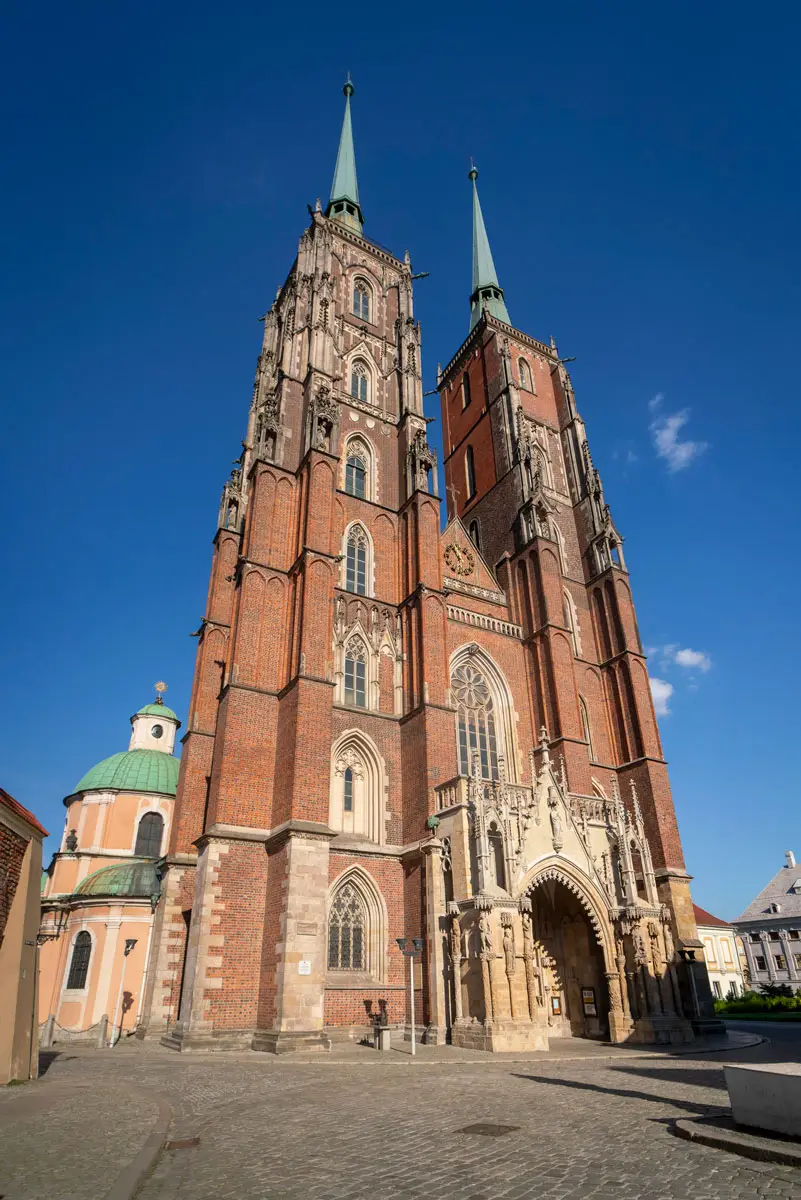
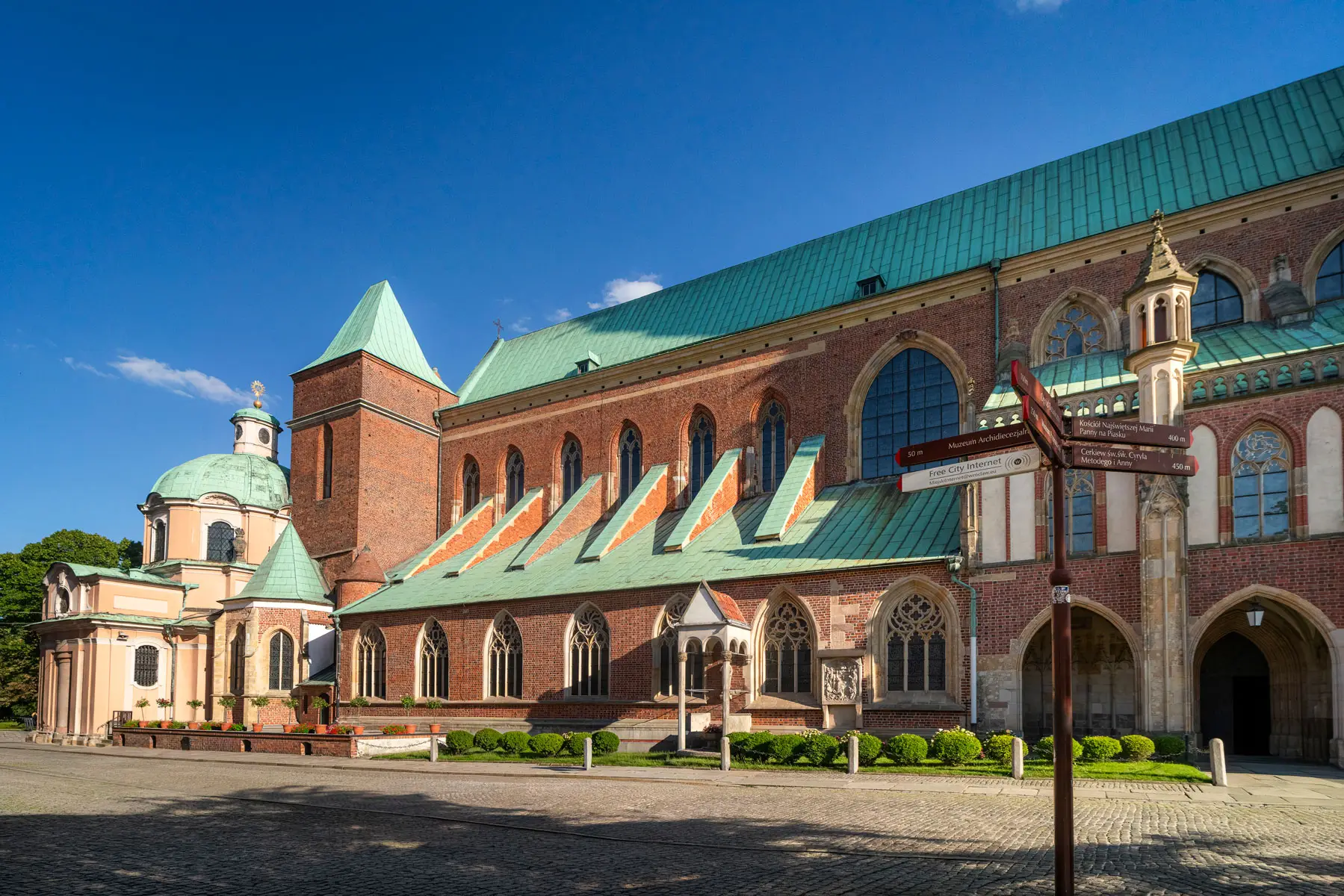
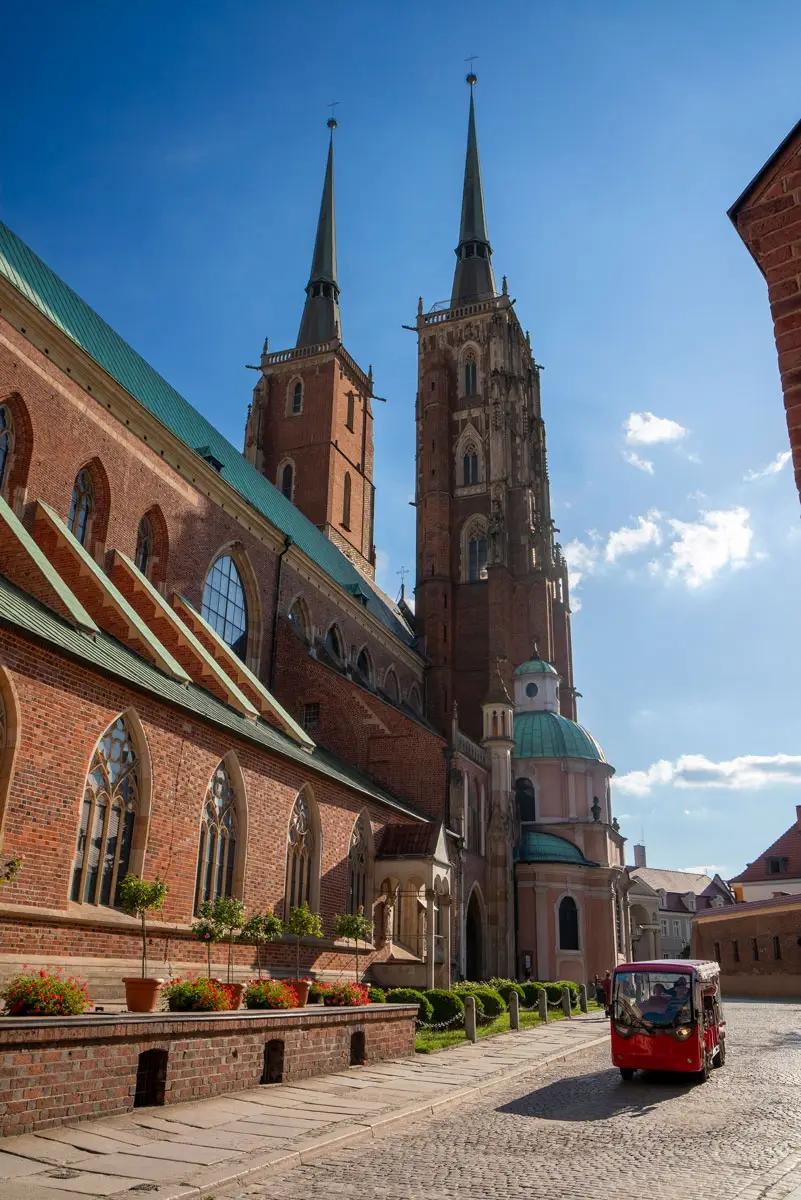
A first glance at the panorama of Ostrów Tumski leaves no doubt as to which building has defined its character for centuries. For centuries, the soaring spires of the Metropolitan Cathedral of St John the Baptist have towered over the historic part of Wrocław, serving as a reminder of the times when the city was one of Silesia’s most important religious and political centres. In its current form, the cathedral was built following the destruction caused by the Mongol invasion of 1241, replacing the earlier Romanesque cathedral. Construction began on the initiative of Bishop Thomas I, and the subsequent phases were carried out over a period of nearly two centuries. As a result, by examining the building’s architecture, it is possible to trace the development of Silesian Gothic from its early forms to the stylistic features characteristic of the late Middle Ages.
The building has been designed as a three-nave basilica with an elongated chancel surrounded by a cloister and a ring of chapels. It was one of the most ambitious projects of its time, inspired by the architecture of the great cathedrals of Western Europe. The soaring forms, the system of buttresses, the ogival windows and the rib vaults form a cohesive composition which, over the centuries, has become one of Wrocław’s most important symbols. Of particular significance is the group of chapels founded by bishops and Silesian noble families. Their interiors bear witness to the successive stages in the development of religious art – from the Gothic through the Renaissance to the mature Baroque – making the cathedral a unique place not only in architectural terms, but also historically.
The cathedral’s history mirrors that of the city itself. The cathedral has survived fires, wars and numerous renovations, but it suffered the most damage in 1945. During the siege of Festung Breslau, a significant part of the walls, vaults and furnishings were damaged. The post-war reconstruction, which took several decades, restored the building to its historic appearance, thanks to which the cathedral once again became the dominant feature of Ostrów Tumski and one of the most important examples of religious Gothic architecture in Poland. Today, it remains not only the seat of the Metropolitan Bishop of Wrocław, but also a testament to over eight centuries of the history of the city and the whole of Silesia.