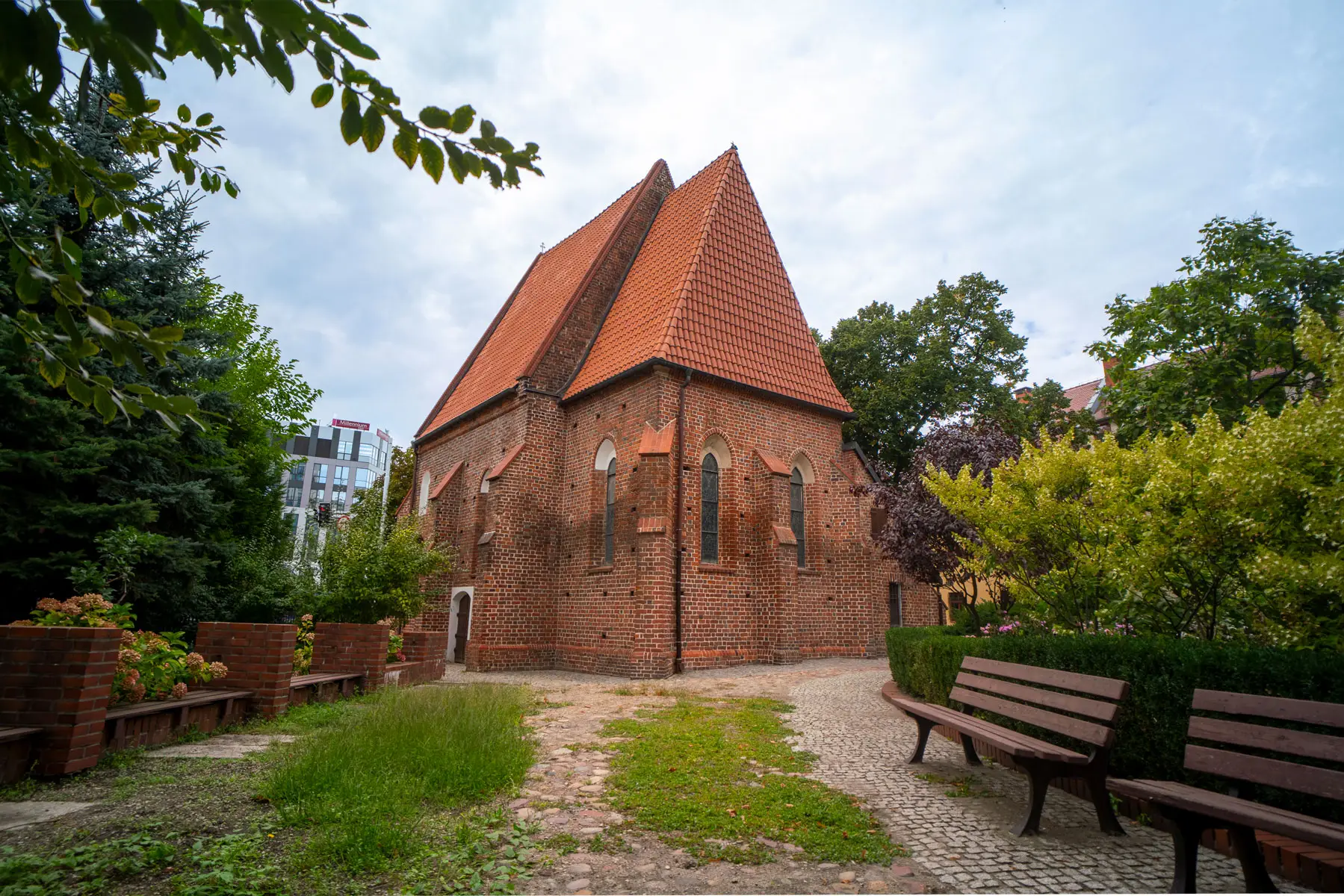
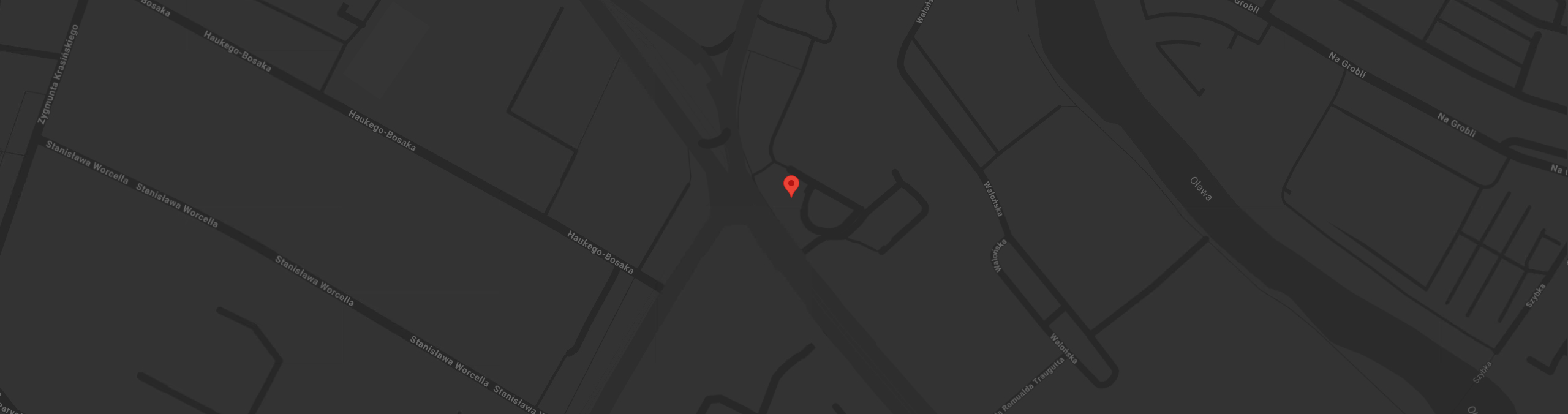
The Church of St Lazarus is one of the oldest surviving churches in the former Oława Suburb and is one of the most valuable examples of medieval hospital activity in Wrocław. The present Gothic church was built in the second half of the 14th century as part of a hospital complex for lepers that had existed since the 13th century. The complex remained under the care of the Order of St Lazarus of Jerusalem, whose work centred on caring for the sick and the marginalised. In accordance with medieval hygiene rules, the hospital, together with the church, was built outside the city walls, at the road leading from Wrocław to Oława.
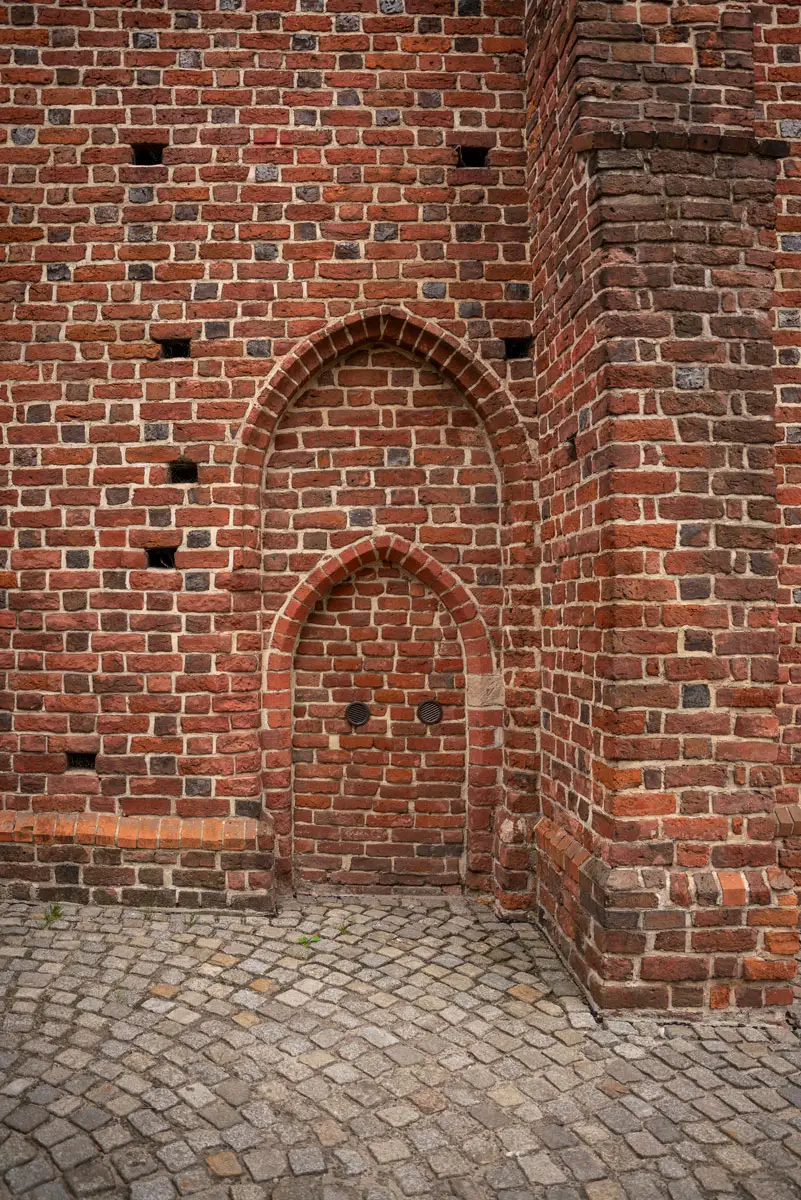
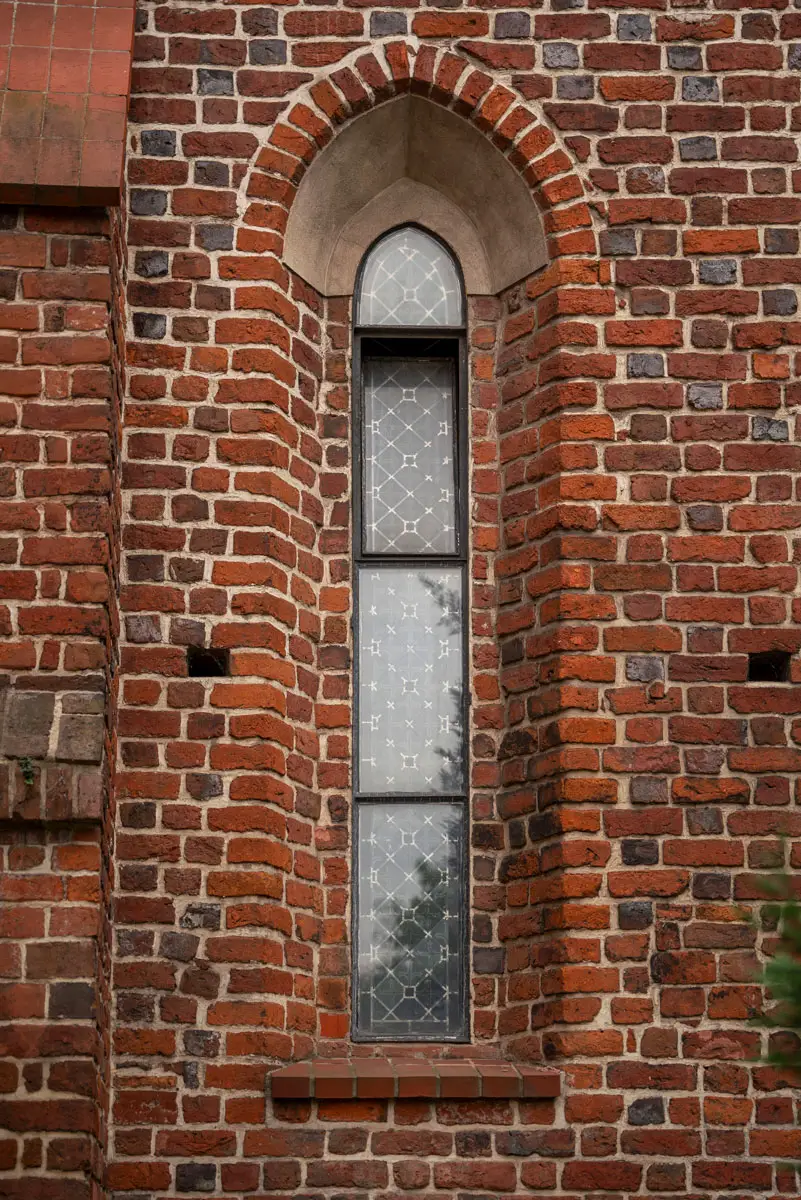
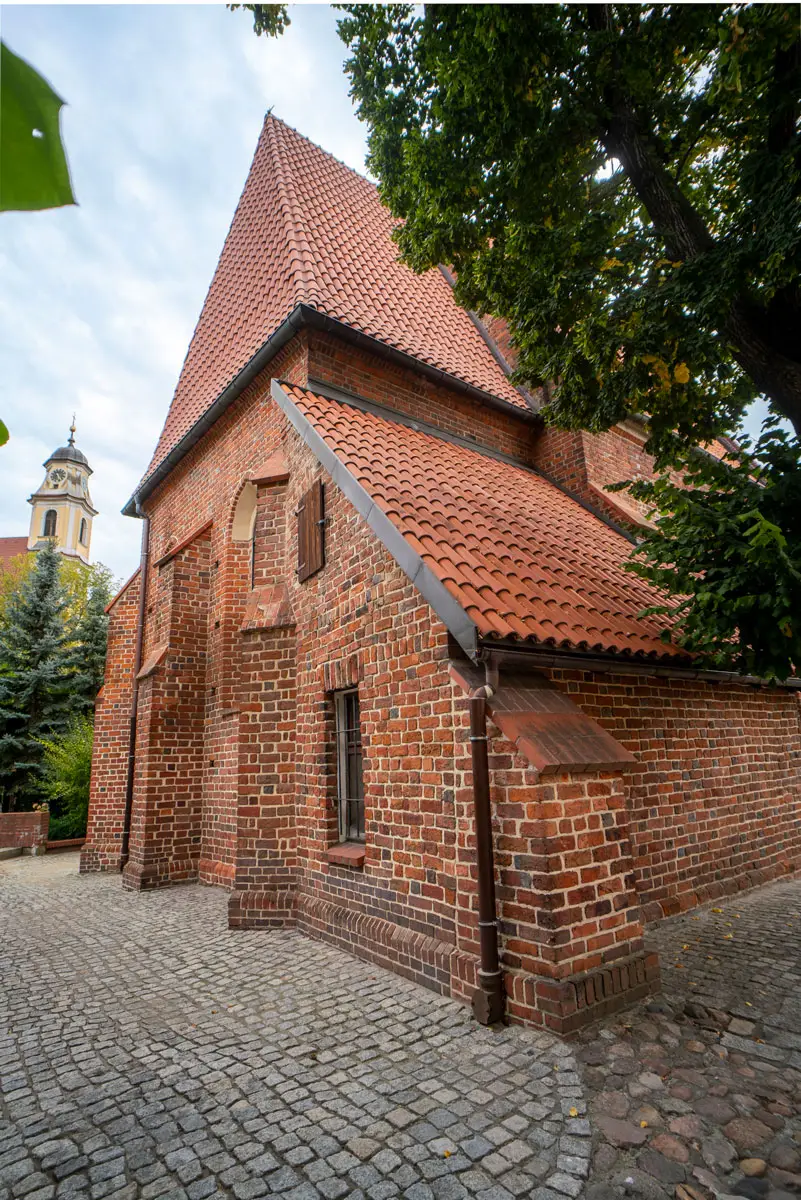
The church is an example of late Gothic brick architecture, characterised by its modest, functional style, which meets the needs of a hospital church. The surviving ogival windows, buttresses and medieval walls are among the most valuable features of the original building. Architectural studies have shown that the main structure of the church originally had a two-nave layout, supported by a central pillar. Following the destruction of the Second World War, the pillar was not rebuilt, which is why the interior now has its current single-nave layout. Despite subsequent alterations, the church has retained its clearly recognisable Gothic form and remains one of the best-preserved examples of medieval hospital architecture in Lower Silesia.
For centuries, the church was associated with one of Wrocław’s oldest hospitals, serving as a place of prayer for both the sick and the monks who cared for them. Despite numerous alterations and reconstruction following the war damage, it has retained its historic character and continues to serve as a reminder of the important role that medieval hospitals played in the city’s life. Today, the church is a valuable example of Gothic religious architecture and the development of medieval care for the sick in Wrocław.