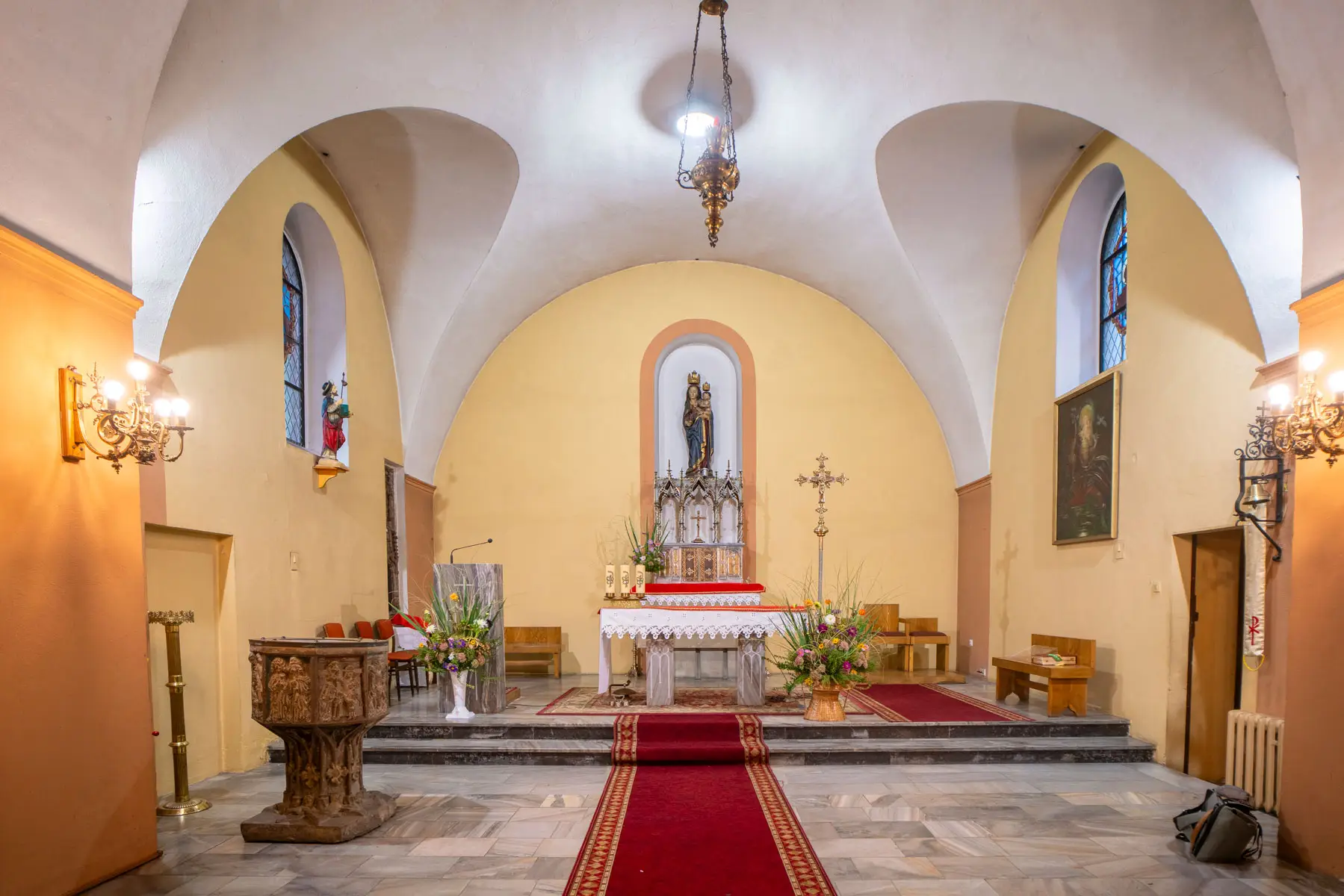
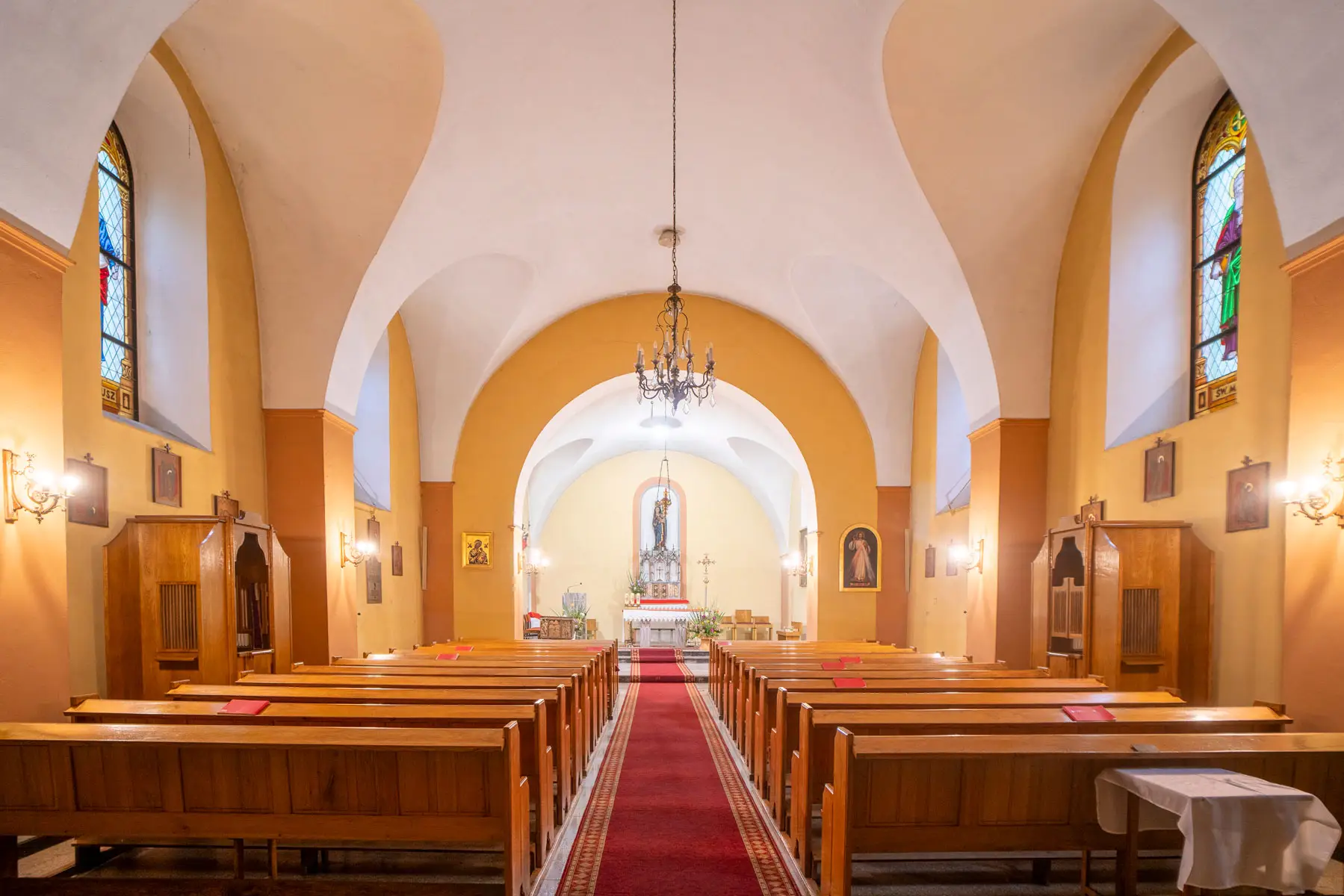
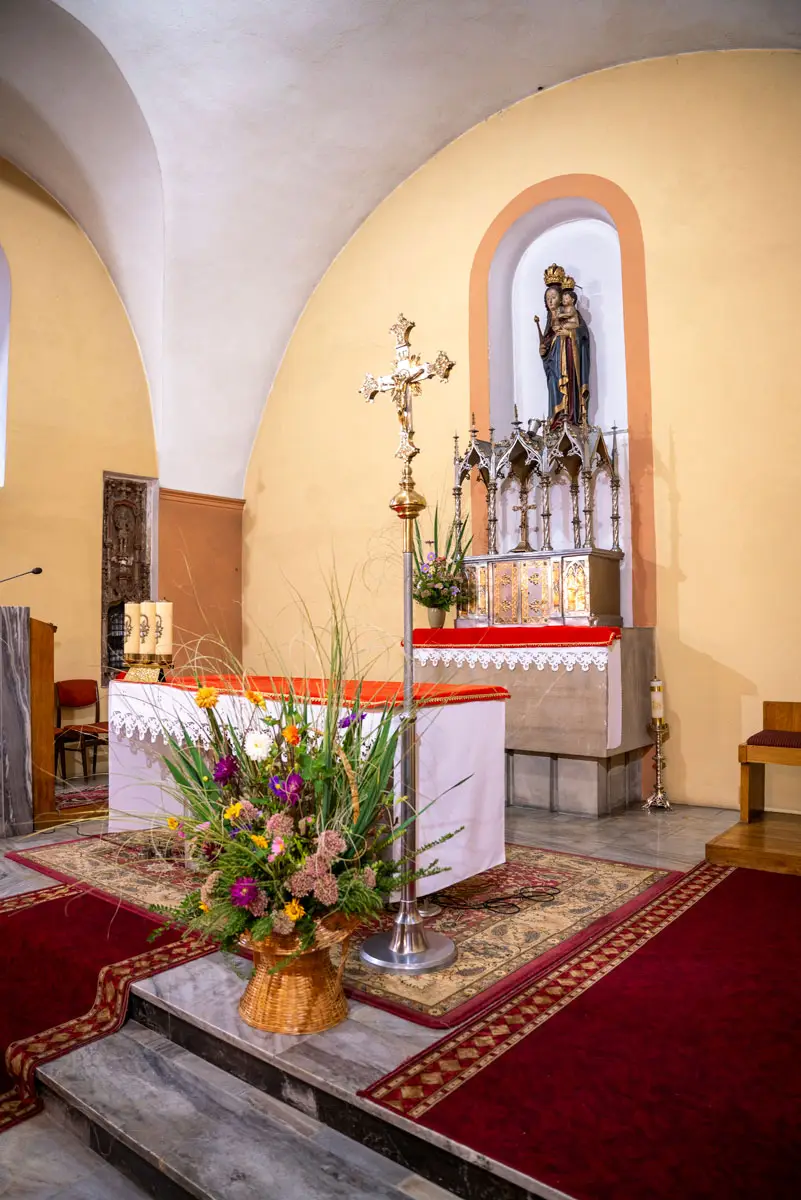
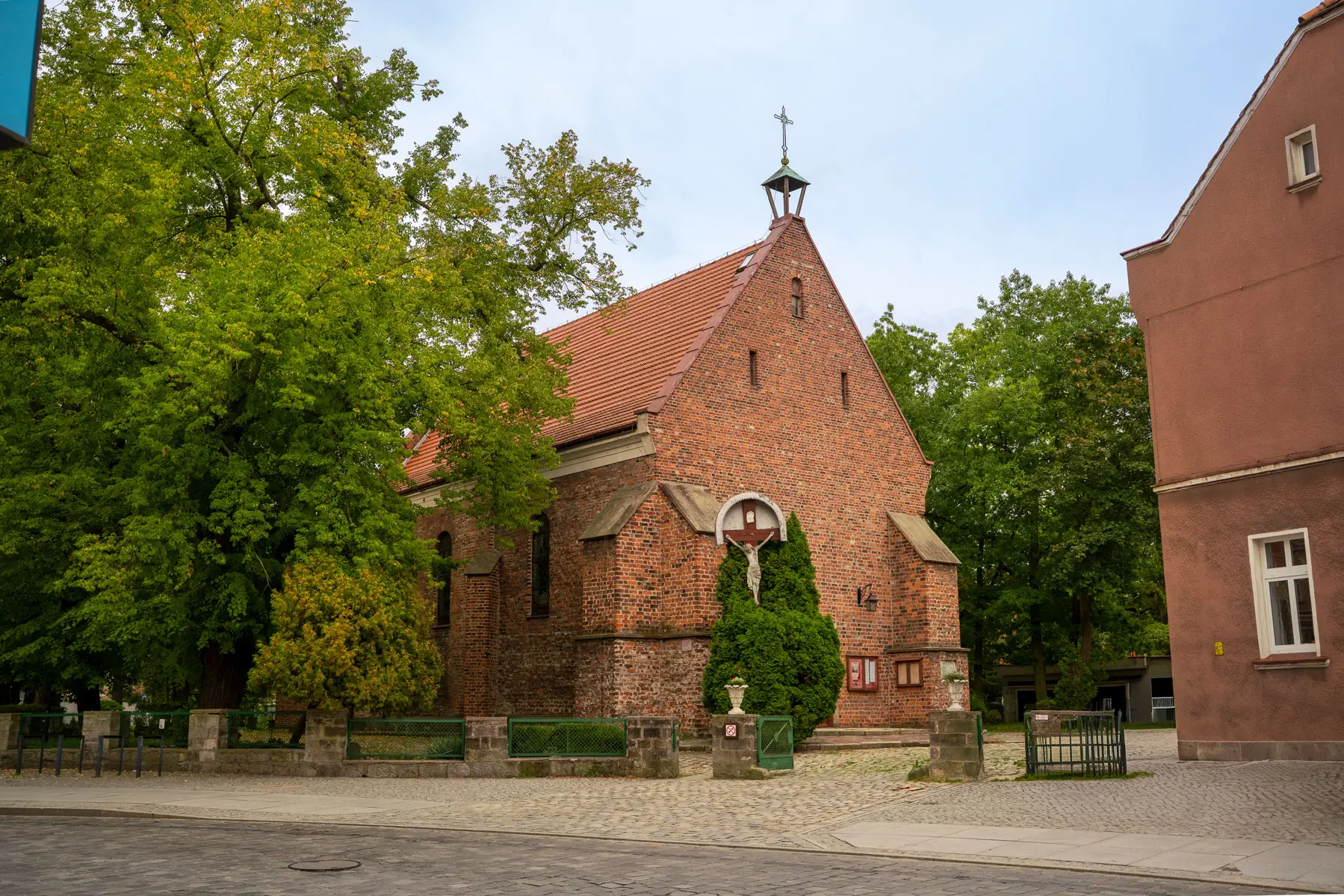
The history of the Church of St James the Apostle and St Christopher is inextricably linked to the former town of Psie Pole, which developed independently of Wrocław for centuries. In the 14th century, as that settlement and parish grew, work began on a new Gothic church to replace the earlier one. The building that was erected quickly became the centre of religious life for the local community, and its silhouette still serves as a reminder of the days when Psie Pole was a separate town.
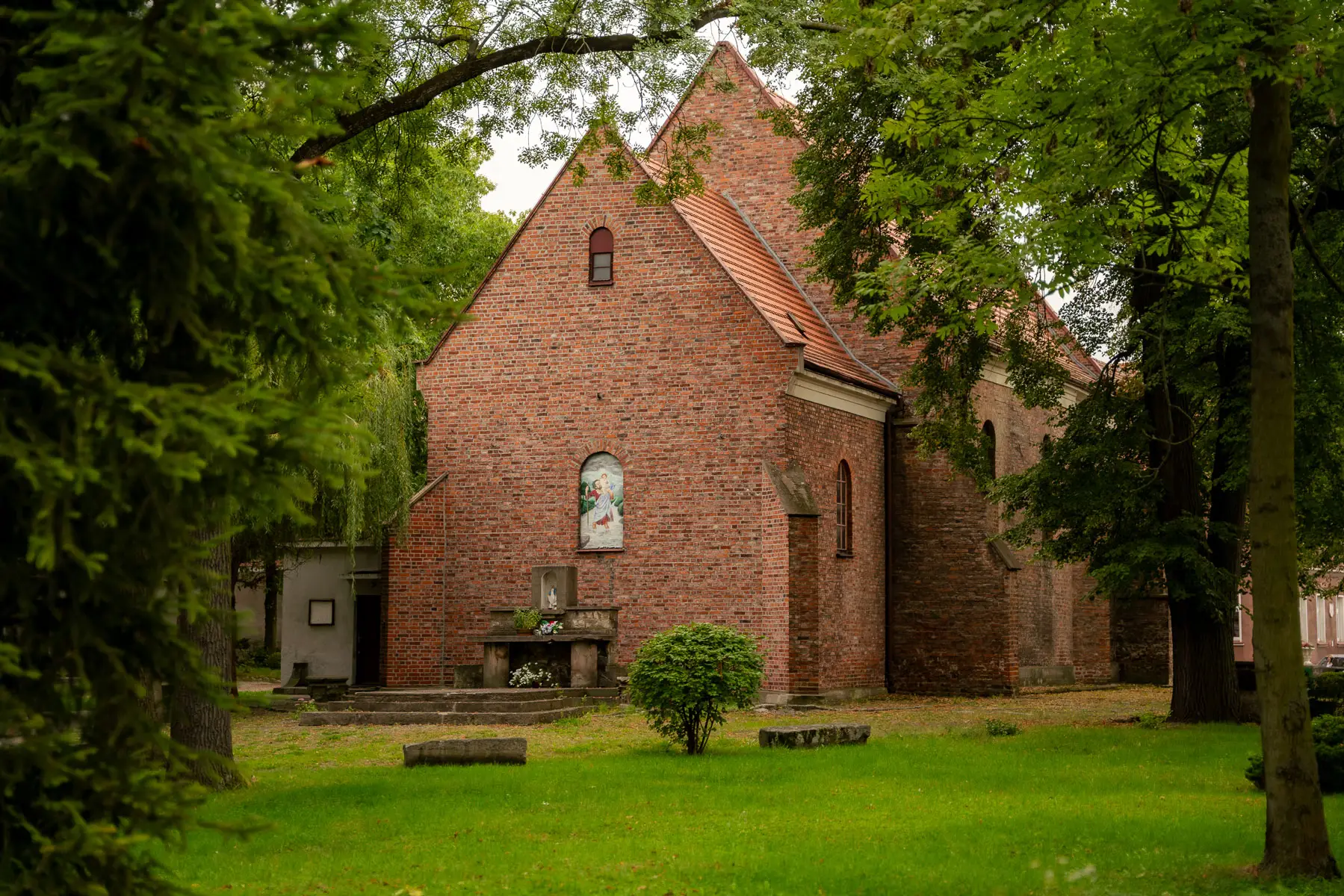
The church’s architecture is representative of a distinctive Silesian parish Gothic style. The brick structure, with its elongated chancel, massive tower and buttresses, retained the proportions typical of medieval churches built in small towns and settlements. Unlike the monumental churches of the Old Town or Ostrów Tumski, it was not intended to serve a ceremonial purpose, but rather to meet the needs of the local community. The simplicity of its form, the carefully crafted details and the preserved elements of its Gothic structure mean that the church remains one of the best-preserved examples of medieval parish architecture on the outskirts of Wrocław.
Over the centuries, the church has been renovated and enlarged on numerous occasions, yet the essential form of its Gothic structure remains clearly recognisable to this day. Following the incorporation of Psie Pole into Wrocław in 1928, the church retained its role as the centre of the former parish, while also serving as a testament to the history of this part of the city. Today, it is one of the few historic buildings that serve as a reminder of the medieval roots of the former town and of its distinct identity, before it became a north-eastern district of modern-day Wrocław.