For centuries, Piasek Island has been an important centre of religious life in Wrocław, and its history is inextricably linked with the Order of the Canons Regular of St Augustine. The present Church of St Mary on the Sand Island was built on the site of an earlier Romanesque church, which dates back to the 12th century. Its construction is linked to Piotr Włostowic, his wife Maria and their son Świętosław, and the surviving Romanesque tympanum showing the church’s founder is one of the most valuable remnants of that original church. The Romanesque church survived until the 14th century, when a decision was made demolish it and erect a much larger Gothic building.
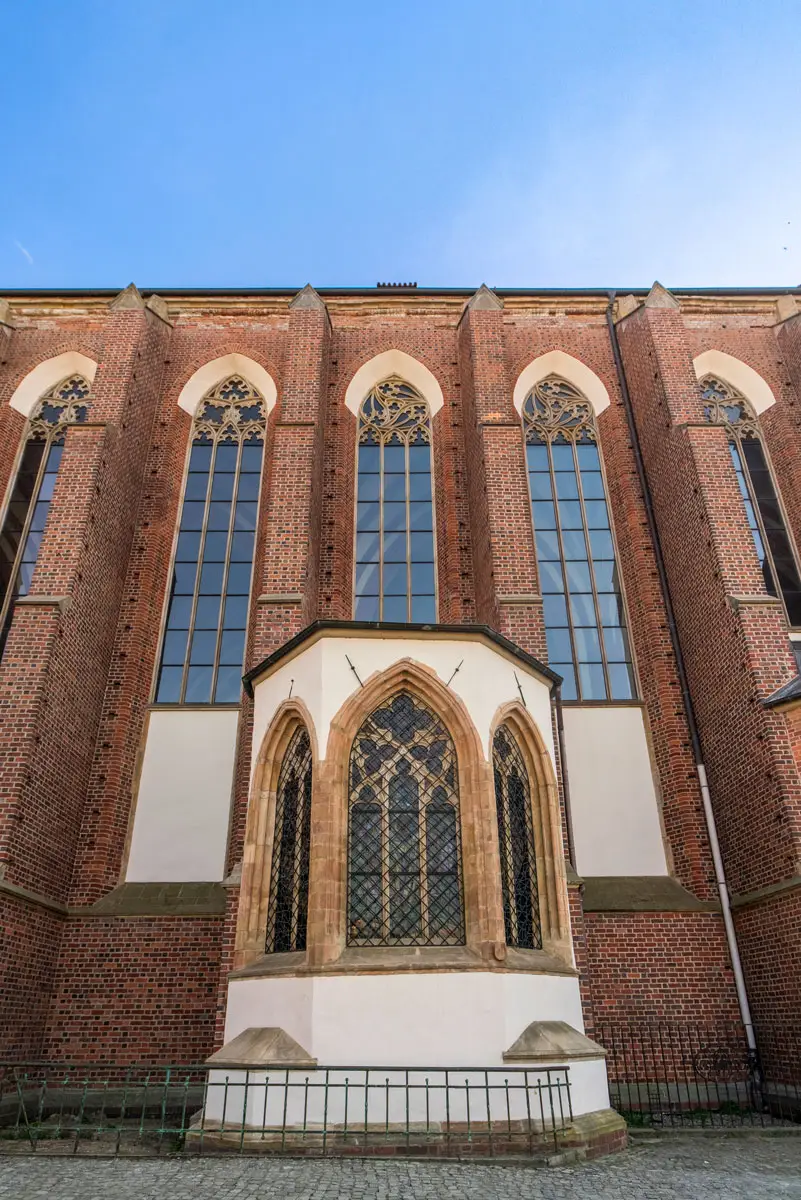
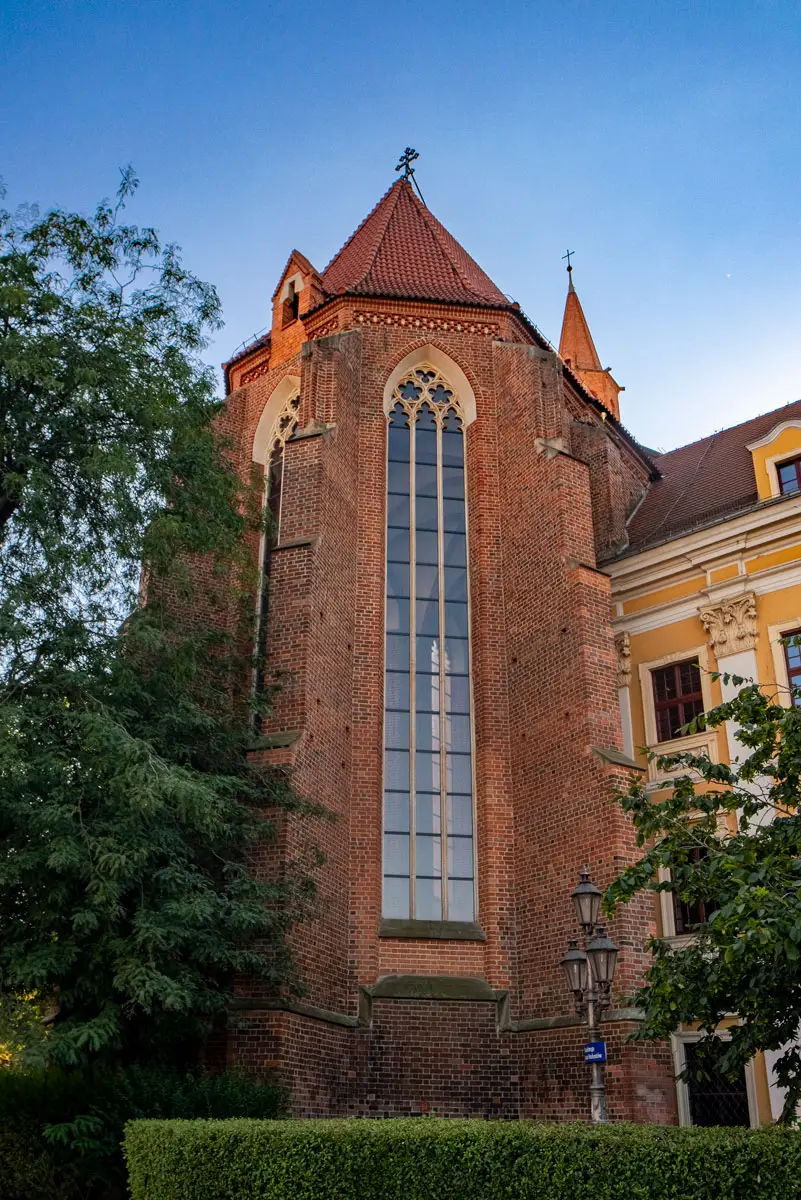
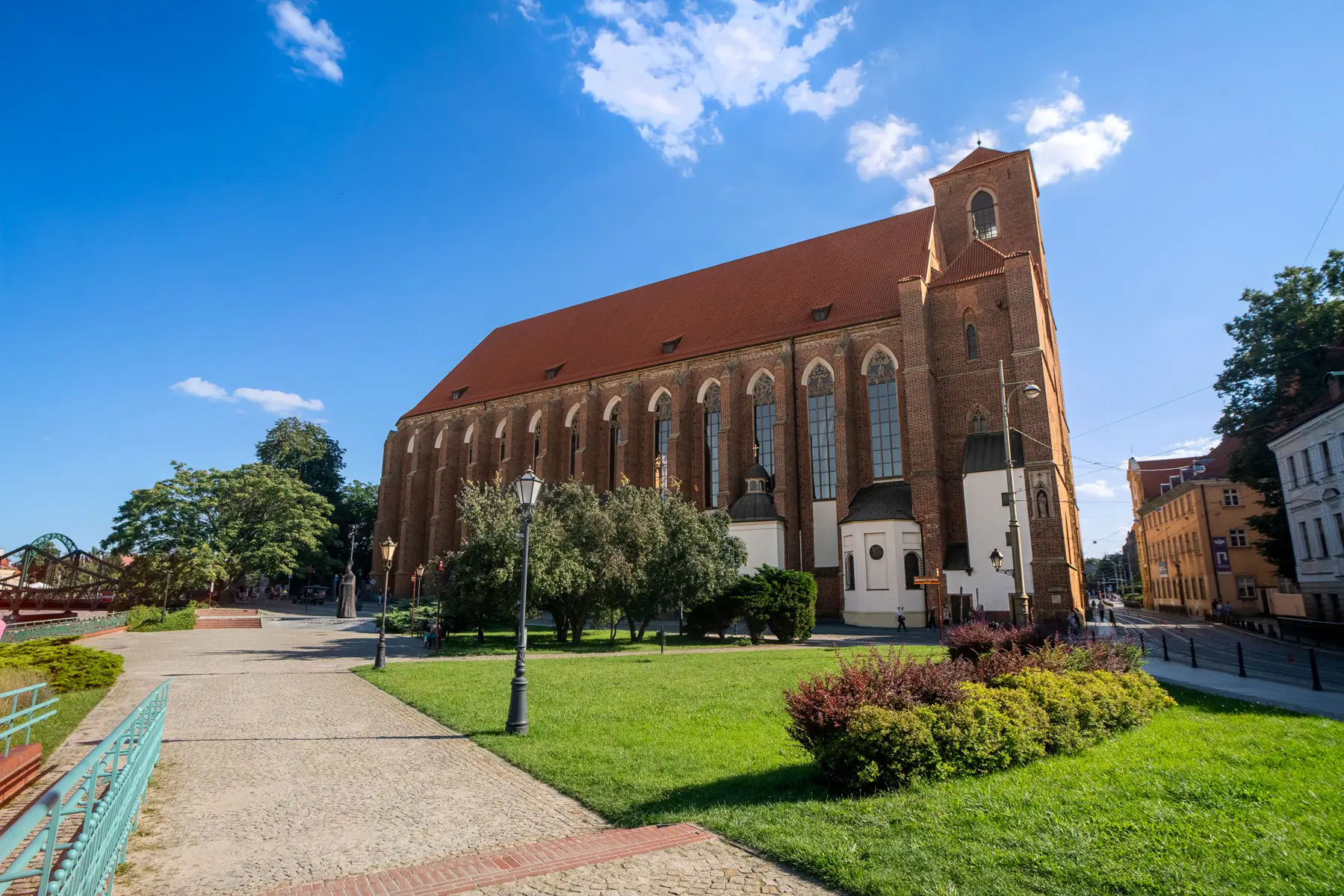
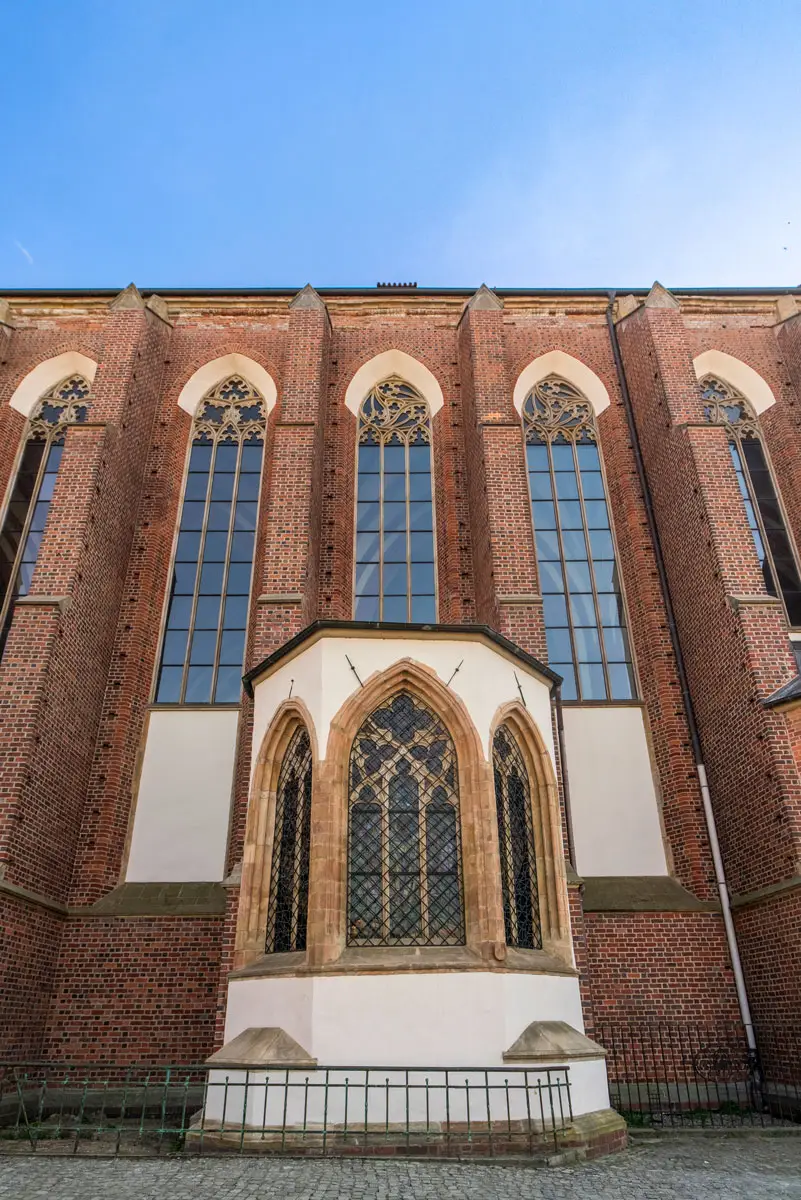
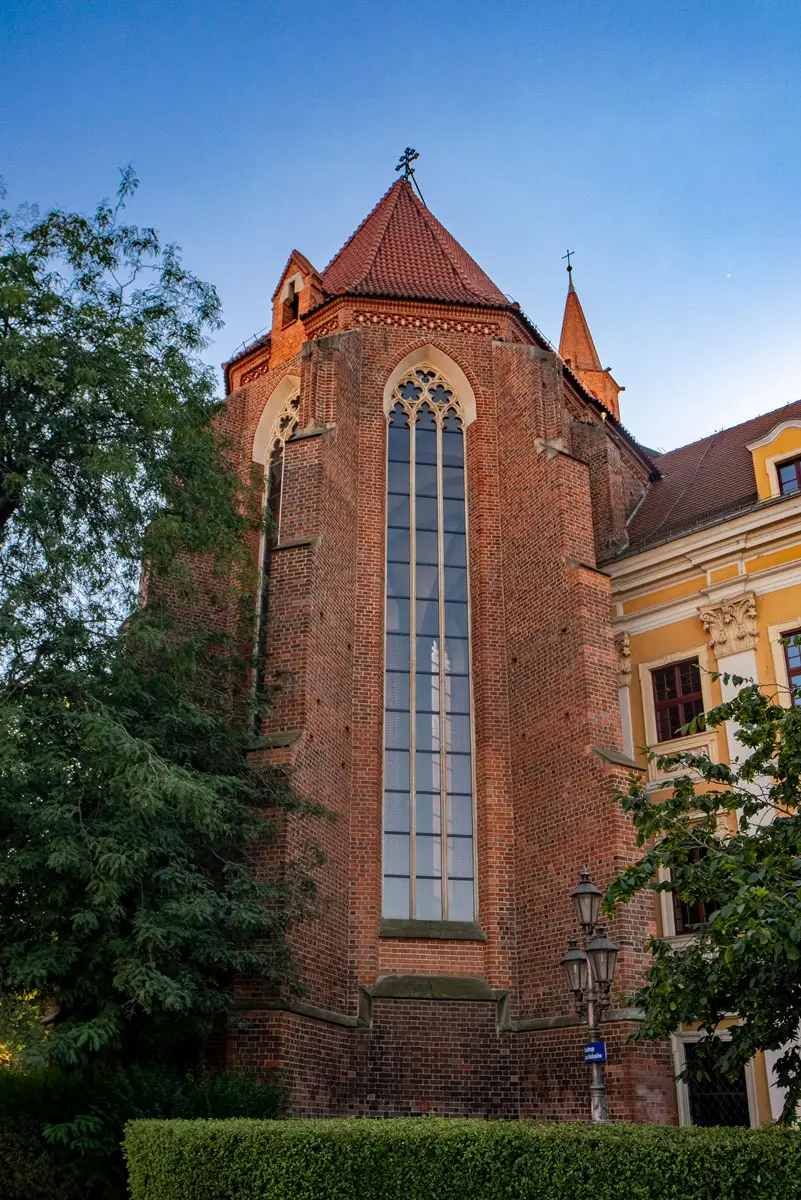
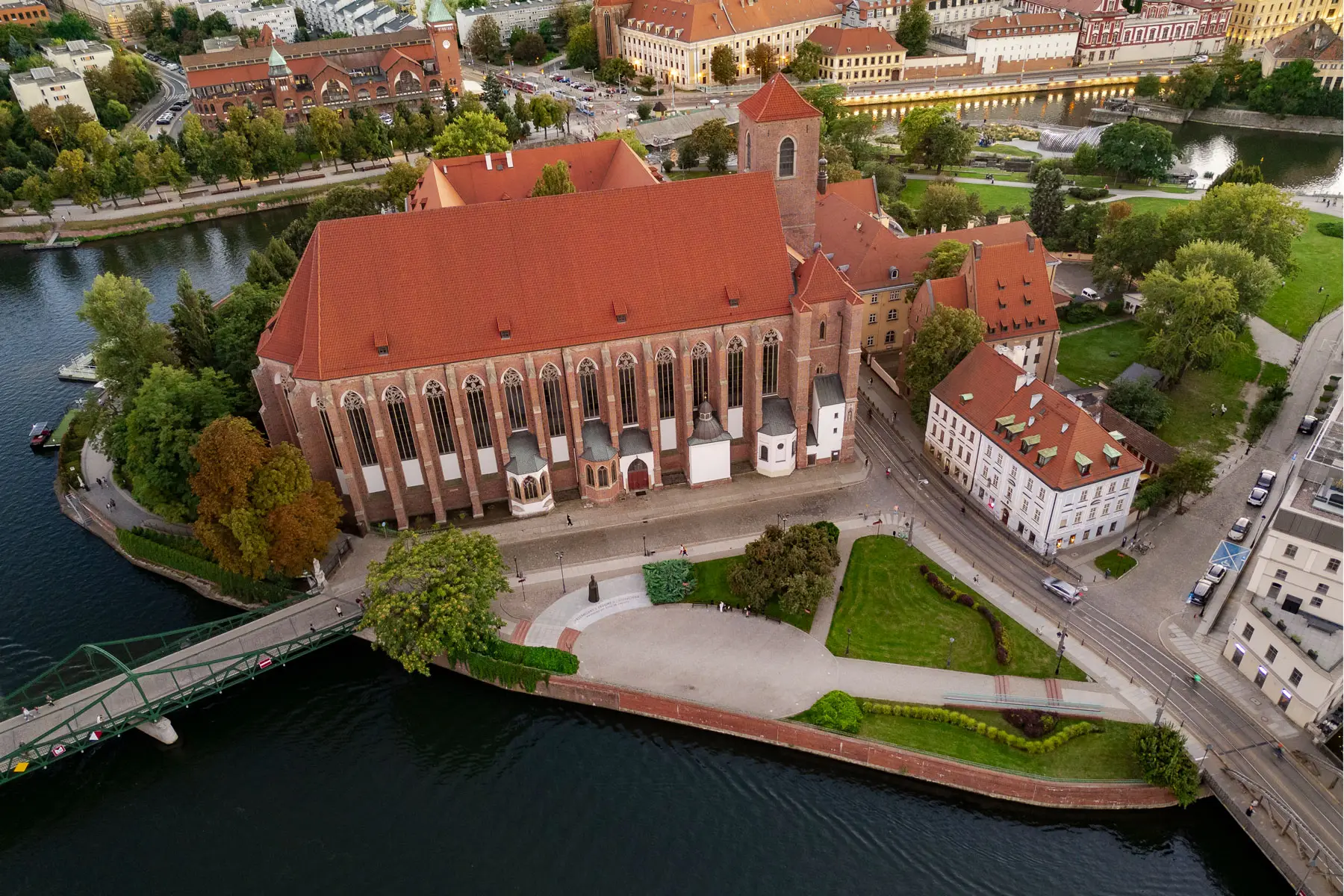
Construction of the present church began in 1334 on the initiative of Abbot Konrad of Oleśnica. The church was designed as a monumental, three-nave hall church without a transept, characteristic of Silesian Gothic architecture. Built of brick, with stone architectural details, the church features a massive and compact structure, tall ogival windows with tracery, and an extensive system of buttresses. Above the nave there are star-vaulted ceilings, and the interior was originally separated from the chancel by a stone chancel screen. The western façade was designed with two towers, but only the southern one was completed; the northern one remained at the level of the nave walls.
The construction and extension of the church continued over the following decades. In 1365, Bishop Przecław of Pogorzela consecrated the new Gothic church, and further work continued in the 14th and 15th centuries. Over the following centuries, the church was rebuilt and its furnishings were expanded to include new items. The year 1945 proved to be disastrous: During the siege of Wrocław, a fire almost completely destroyed the Baroque interior décor, the altars and the organ, as well as the roof and a significant part of the vaults. The post-war reconstruction restored the church’s Gothic character, and during the work, the remains of earlier 12th- and 13th-century walls were also uncovered and preserved.